Stakeholder Interview - Nền Tảng Để Thiết Lập Mục Tiêu Thiết Kế
Stakeholder Interview - Nền Tảng Để Thiết Lập Mục Tiêu Thiết Kế
When lacking information or support, our perspective can be limited, making it difficult to identify potential issues. During the project implementation process, no individual can handle all the challenges on their own. The involvement of stakeholders with relevant knowledge and expertise is a crucial factor in making informed decisions and creating an effective user experience.


Like user interviews, interviewing stakeholders can provide you with information about the project and ensure that you aren’t doing irrelevant work or wasting time on research that has already been done. We will look at stakeholders in the project and why you need them to participate in your project; how to do that and how to use this important information in the design process and optimize the output results.
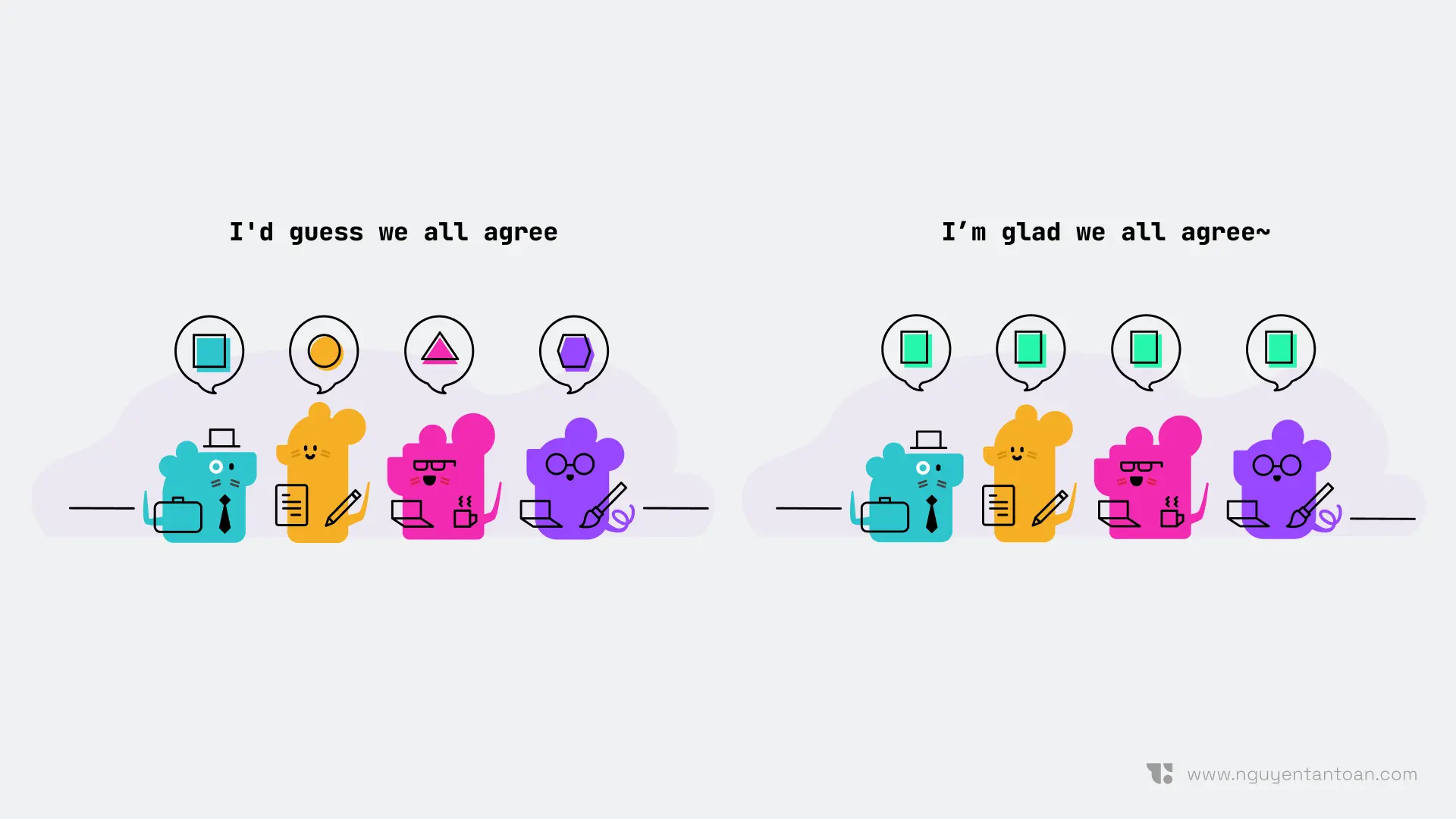
Stakeholder, who are they?
Stakeholders refer to the individuals or groups that affect or are affected by a project’s outcome. Therefore, when carrying out a user research project, you should take the time to identify who the most important stakeholders are for your design project, and if possible, invite their collaboration to assist you in realizing your design process.
Anyone whose work will be impacted by your research is a stakeholder, regardless of their tenure or job title. This includes people like customer service experts, who will bear a heavy burden if the design or product experience is poor, or they may be silent partners who will shoulder the heavy lifting at the end of a project.
The more connections you have within an organization, the easier it will be to identify your stakeholders. Relying on your team manager or others who have a good understanding of the organization can help you find the right people to involve.
Potential stakeholders for UX research include people who:
Influence the organization
Make decisions about time, money, and resources
Are involved in the product design process and user experience
Have relevant information regarding your project
Will work based on the insights from your research
When should you interview stakeholders?
The Stakeholder Interview is an important tool in the early stages of the product development process, when you are trying to define your goals and plan your research.
Not only in the early stages, but for complex or long-term projects, you should sit down and talk to stakeholders at least once in each stage of the product. This ensures that your research is on the right track, the entire team generates new ideas, and gathers any additional information that the project might need.
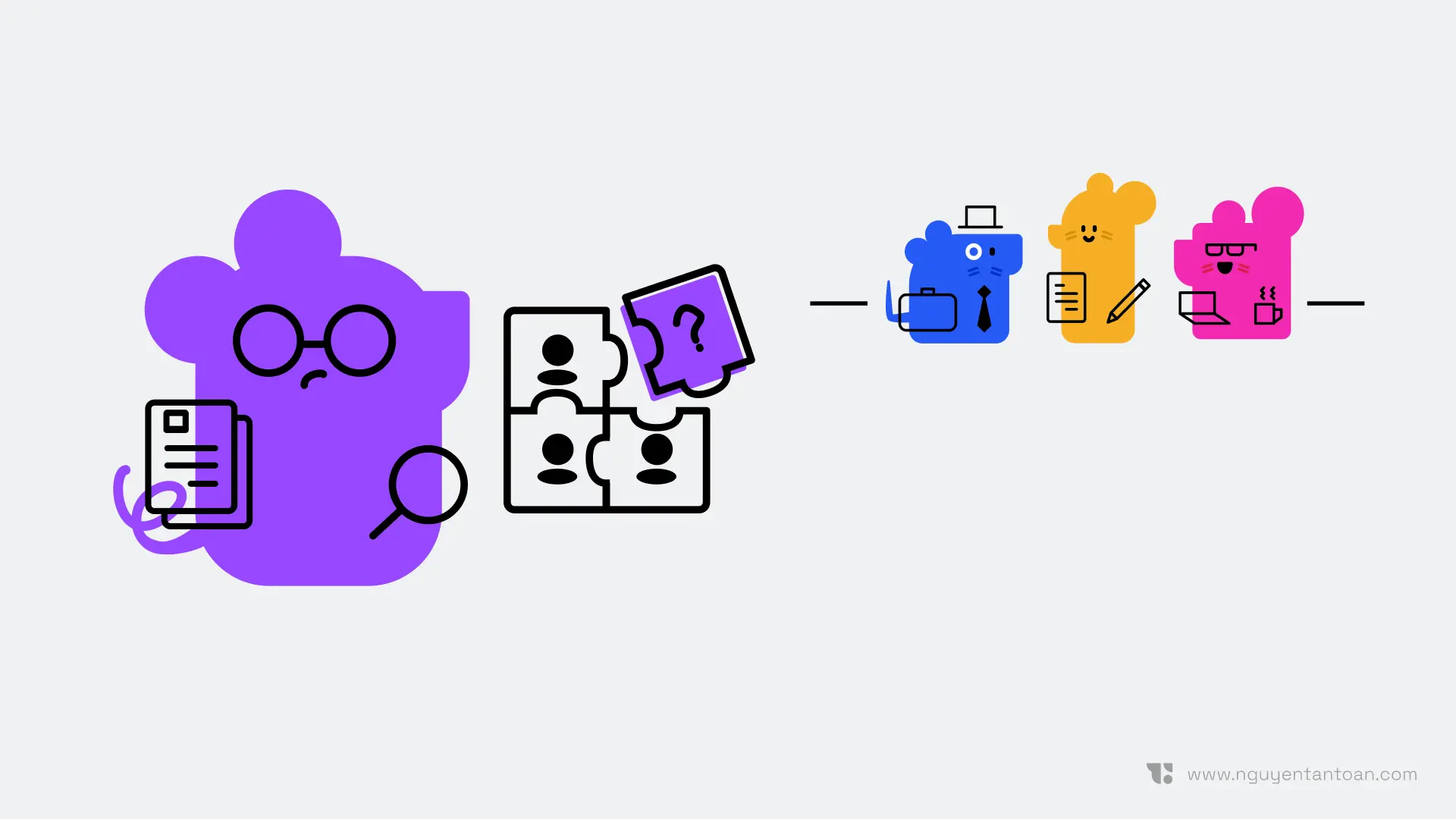
What are the benefits of interviewing stakeholders?
1. Defining goals
Stakeholders contribute to the success of your project. But what exactly do the stakeholders in the project want? What do they need? What does success look like for them?
Project summaries and design requirements often include ambiguities that can lead to misunderstandings. It’s not uncommon for stakeholders to have requirements they haven’t articulated or written in initial documents because they assume these are given, or because they are unaware of them. Just like interviewing users, interviewing stakeholders helps to uncover all such unspoken goals, detailing and clarifying nuances that may be overlooked or muddied during the process.
2. Understanding the constraints and needs
What is the product vision? What are the needs at this stage? What do the existing metrics look like? What could hinder the sales or marketing of the product? What has worked well in the past? What hasn’t?
Engaging with stakeholders will provide you with an initial basis regarding available resources and help you determine whether the intended research is necessary. It’s very likely that they have done some data discovery of their own, and they may even point you to a database that helps save time and resources. Conversely, interviewing stakeholders may also reveal their information limitations. Do they know nothing about user needs? Are the assumptions they are making about what users truly need valid?
A part of the researcher’s job is to identify user goals that stakeholders are not focusing on or are not even aware of.
3. Gaining trust
If you do your job well and genuinely care about every aspect of the project, along with a professional approach, you can often attract their participation. Addressing future issues becomes easier when there is trust and communication established from the outset.
Even when stakeholders participate in the user experience research process, they may still be skeptical of you (if you are new to them). Simply because it directly relates to the resources, time, and costs incurred within their planning.
Interviewing stakeholders is an opportunity for you to establish or maintain relationships with key players in the game, showing concern for their goals, clarifying each party's thoughts, and helping everyone feel like they have contributed to the project.
Are there any limitations in interviewing stakeholders?
Conducting stakeholder interviews comes with its own set of challenges. In terms of limitations, they are minor compared to the value gained. However, the following should be considered when planning stakeholder interviews.
1. It will take time
The entire process takes time — it could be a significant amount of time. You can often manage the issue simply by scheduling your time so that you only conduct X number of interviews within Y timeframe. Or you may need to shorten part of the interview process to meet deadlines or rationally combine interviews.
2. Some stakeholders may not want to participate
Some stakeholders are willing to consult with you. Others may not be as interested. You will need to assess their level of interest in participating in the interview so that you do not ask for more information than they are willing to provide. Ensuring that your interviews are well-organized and conducted professionally will help build confidence in you.
3. Creating expectations
When people participate in research, they tend to develop certain expectations. They want to see results and have answers to their questions. Some stakeholders may even want to know about the data or view videos from research sessions. Planning to communicate results throughout the research process and ensuring that documents and reports are accessible will help.
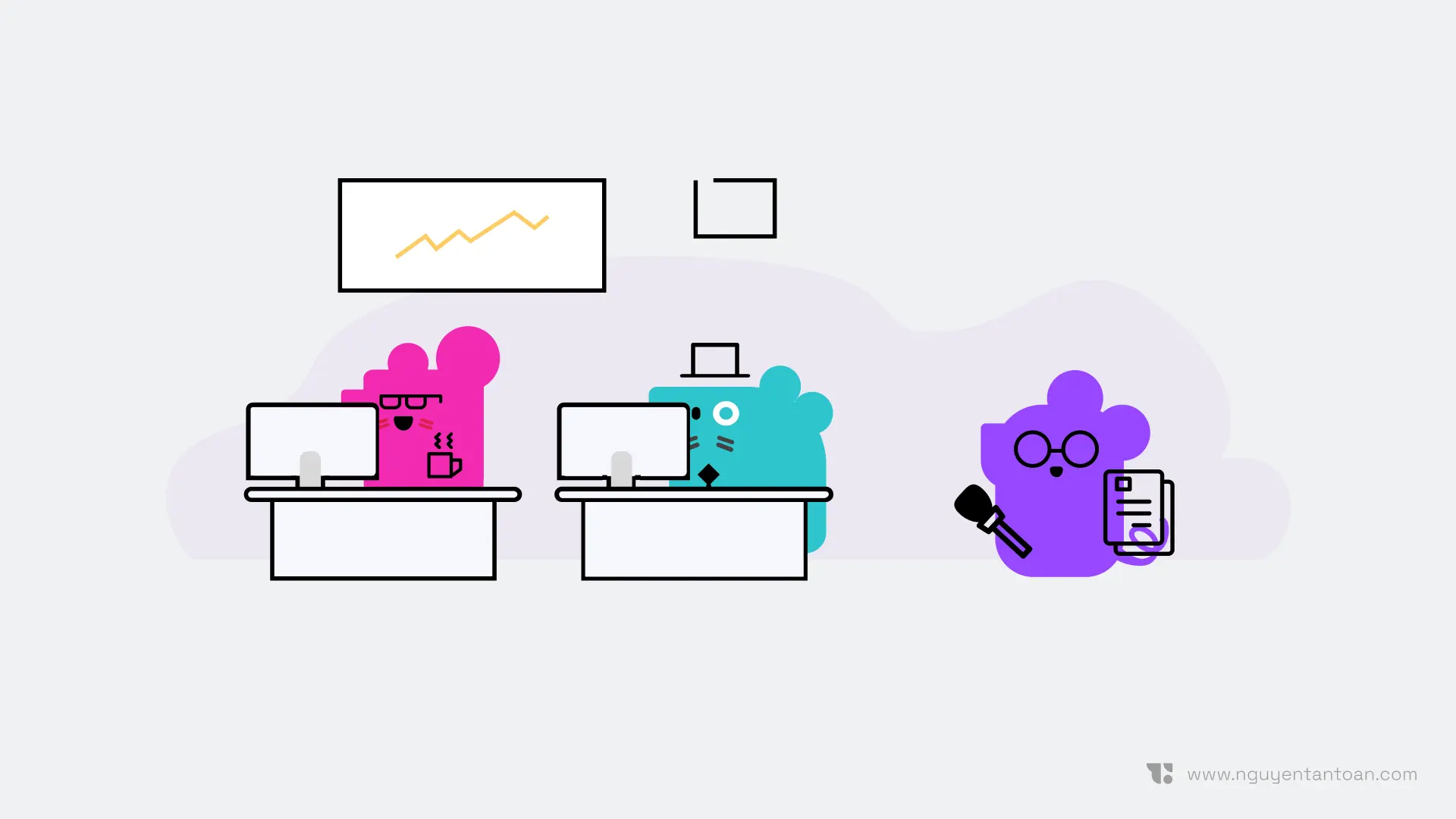
What will you ask the stakeholders?
Like any research, the first thing you need to do is figure out your goals — what do you hope to learn from the stakeholders? You should know what you cannot change so that you can focus your research efforts elsewhere.
Here are some important topics to address when talking to stakeholders:
1. What is this project?
The more you know about the project or product and what the organization hopes to achieve from it, the better you can ensure that the research is relevant.
Project overview:
Introduce a brief history of the project?
What is the reason for undertaking this product/project?
What are the goals of the project?
What do we need to clarify?
Who are our biggest competitors?
Business goals:
What are the short-term and long-term business objectives?
What value does this project bring to the business?
What are the biggest product challenges currently?
2. The role and benefits of stakeholders in the project
If you understand the background and motivations of the stakeholders, it will be easier to identify where you might encounter resistance or gain support for your research and design changes. Common questions include:
What is your role in this project?
What have you done before in this project?
What do you personally think is success for this project?
What concerns do you have regarding this project?
How would you like to participate in user research? (e.g., viewing reports, participating in interviews, workshops results.)
Is there anyone else we need to talk to?
3. What has been decided about the project?
If you know the limitations of the project, you will find it easier to decide how ambitious you can be regarding research and design changes. Possible questions include:
What has been decided about the project/product so far?
What requirements have been decided for the product?
What technology decisions have been made and how solid are they?
When will the product be released?
How large is the development team?
4. Who are the users?
By clarifying what everyone knows about the users and who the target audience is, you can ensure that the research accurately captures your user. You might ask:
Who are the customers/users?
What problem are we addressing for users?
How will we convey the core value of the product to the customers?
What user research has the team conducted related to this project?
What is the primary context of use for the product?

Some suggestions when interviewing stakeholders?
1. Plan ahead
Identify what you want to achieve in the interviews. What questions do you need to answer, and what is their priority level based on the next steps in your project? Each question you ask should relate to at least one of these objectives. This way, stakeholders' feedback will be useful for your work.
The interview can lead you and the interviewee anywhere. You should plan, having a list of topics/questions to guide the interview closely to the initial roadmap.
2. Be relaxed and friendly
This isn't the type of interview where you work cold and mechanically; these are people you will be working with a lot in the future. It’s true that they are often busy, but they are also usually experts in their field, so breaking down barriers can make conversations engaging. You never know what interesting information they might bring to you. However, be prepared for the possibility that some project questions may go unanswered.
3. Listen to the interview participants
In large organizations, some stakeholders don’t get their opinions and viewpoints on challenges/risks heard as much as they would like. Listen more. You’ll learn fascinating things about how the business operates that will impact your project, and you will make someone else feel validated as part of it.
4. Don’t assume everything they say is the truth.
We are all human, dealing with political issues (within the organization) and everyone is busy. Some information your stakeholders provide may be incomplete, and some of their biases about customers/users may be based on assumptions or outdated patterns. What they have to say is still insightful, just not necessarily the final version of the truth.
5. Be flexible
Proactively go wherever they are available. Especially if they are at high levels. Interviews over coffee in the morning, in the company pantry, anywhere you can spend 30-60 minutes with someone will change your perception of the entire project landscape.
6. Let them leave
There’s nothing worse than having the interviewee distracted. If there’s something they need to address — let them go and reschedule the meeting. They won’t give you their full attention when their phone is buzzing.
7. Tell them about the benefits
Stakeholders are often busy and don’t understand why they should spend time with you. Don’t forget to briefly explain the benefits at the start of the conversation, and even more at the end of your pitch. Show that you’re using their time wisely and for their benefit.
In summary, being proactive will be worth it. One way or another, there’s always a network of various stakeholders that the product is designed to address. Interviewing stakeholders is a great way to capture the situation. They help you understand user behavior, differentiate constraints, and identify pain points.

Like user interviews, interviewing stakeholders can provide you with information about the project and ensure that you aren’t doing irrelevant work or wasting time on research that has already been done. We will look at stakeholders in the project and why you need them to participate in your project; how to do that and how to use this important information in the design process and optimize the output results.
Stakeholder, who are they?
Stakeholders refer to the individuals or groups that affect or are affected by a project’s outcome. Therefore, when carrying out a user research project, you should take the time to identify who the most important stakeholders are for your design project, and if possible, invite their collaboration to assist you in realizing your design process.
Anyone whose work will be impacted by your research is a stakeholder, regardless of their tenure or job title. This includes people like customer service experts, who will bear a heavy burden if the design or product experience is poor, or they may be silent partners who will shoulder the heavy lifting at the end of a project.
The more connections you have within an organization, the easier it will be to identify your stakeholders. Relying on your team manager or others who have a good understanding of the organization can help you find the right people to involve.
Potential stakeholders for UX research include people who:
Influence the organization
Make decisions about time, money, and resources
Are involved in the product design process and user experience
Have relevant information regarding your project
Will work based on the insights from your research
When should you interview stakeholders?
The Stakeholder Interview is an important tool in the early stages of the product development process, when you are trying to define your goals and plan your research.
Not only in the early stages, but for complex or long-term projects, you should sit down and talk to stakeholders at least once in each stage of the product. This ensures that your research is on the right track, the entire team generates new ideas, and gathers any additional information that the project might need.
What are the benefits of interviewing stakeholders?
1. Defining goals
Stakeholders contribute to the success of your project. But what exactly do the stakeholders in the project want? What do they need? What does success look like for them?
Project summaries and design requirements often include ambiguities that can lead to misunderstandings. It’s not uncommon for stakeholders to have requirements they haven’t articulated or written in initial documents because they assume these are given, or because they are unaware of them. Just like interviewing users, interviewing stakeholders helps to uncover all such unspoken goals, detailing and clarifying nuances that may be overlooked or muddied during the process.
2. Understanding the constraints and needs
What is the product vision? What are the needs at this stage? What do the existing metrics look like? What could hinder the sales or marketing of the product? What has worked well in the past? What hasn’t?
Engaging with stakeholders will provide you with an initial basis regarding available resources and help you determine whether the intended research is necessary. It’s very likely that they have done some data discovery of their own, and they may even point you to a database that helps save time and resources. Conversely, interviewing stakeholders may also reveal their information limitations. Do they know nothing about user needs? Are the assumptions they are making about what users truly need valid?
A part of the researcher’s job is to identify user goals that stakeholders are not focusing on or are not even aware of.
3. Gaining trust
If you do your job well and genuinely care about every aspect of the project, along with a professional approach, you can often attract their participation. Addressing future issues becomes easier when there is trust and communication established from the outset.
Even when stakeholders participate in the user experience research process, they may still be skeptical of you (if you are new to them). Simply because it directly relates to the resources, time, and costs incurred within their planning.
Interviewing stakeholders is an opportunity for you to establish or maintain relationships with key players in the game, showing concern for their goals, clarifying each party's thoughts, and helping everyone feel like they have contributed to the project.
Are there any limitations in interviewing stakeholders?
Conducting stakeholder interviews comes with its own set of challenges. In terms of limitations, they are minor compared to the value gained. However, the following should be considered when planning stakeholder interviews.
1. It will take time
The entire process takes time — it could be a significant amount of time. You can often manage the issue simply by scheduling your time so that you only conduct X number of interviews within Y timeframe. Or you may need to shorten part of the interview process to meet deadlines or rationally combine interviews.
2. Some stakeholders may not want to participate
Some stakeholders are willing to consult with you. Others may not be as interested. You will need to assess their level of interest in participating in the interview so that you do not ask for more information than they are willing to provide. Ensuring that your interviews are well-organized and conducted professionally will help build confidence in you.
3. Creating expectations
When people participate in research, they tend to develop certain expectations. They want to see results and have answers to their questions. Some stakeholders may even want to know about the data or view videos from research sessions. Planning to communicate results throughout the research process and ensuring that documents and reports are accessible will help.
What will you ask the stakeholders?
Like any research, the first thing you need to do is figure out your goals — what do you hope to learn from the stakeholders? You should know what you cannot change so that you can focus your research efforts elsewhere.
Here are some important topics to address when talking to stakeholders:
1. What is this project?
The more you know about the project or product and what the organization hopes to achieve from it, the better you can ensure that the research is relevant.
Project overview:
Introduce a brief history of the project?
What is the reason for undertaking this product/project?
What are the goals of the project?
What do we need to clarify?
Who are our biggest competitors?
Business goals:
What are the short-term and long-term business objectives?
What value does this project bring to the business?
What are the biggest product challenges currently?
2. The role and benefits of stakeholders in the project
If you understand the background and motivations of the stakeholders, it will be easier to identify where you might encounter resistance or gain support for your research and design changes. Common questions include:
What is your role in this project?
What have you done before in this project?
What do you personally think is success for this project?
What concerns do you have regarding this project?
How would you like to participate in user research? (e.g., viewing reports, participating in interviews, workshops results.)
Is there anyone else we need to talk to?
3. What has been decided about the project?
If you know the limitations of the project, you will find it easier to decide how ambitious you can be regarding research and design changes. Possible questions include:
What has been decided about the project/product so far?
What requirements have been decided for the product?
What technology decisions have been made and how solid are they?
When will the product be released?
How large is the development team?
4. Who are the users?
By clarifying what everyone knows about the users and who the target audience is, you can ensure that the research accurately captures your user. You might ask:
Who are the customers/users?
What problem are we addressing for users?
How will we convey the core value of the product to the customers?
What user research has the team conducted related to this project?
What is the primary context of use for the product?
Some suggestions when interviewing stakeholders?
1. Plan ahead
Identify what you want to achieve in the interviews. What questions do you need to answer, and what is their priority level based on the next steps in your project? Each question you ask should relate to at least one of these objectives. This way, stakeholders' feedback will be useful for your work.
The interview can lead you and the interviewee anywhere. You should plan, having a list of topics/questions to guide the interview closely to the initial roadmap.
2. Be relaxed and friendly
This isn't the type of interview where you work cold and mechanically; these are people you will be working with a lot in the future. It’s true that they are often busy, but they are also usually experts in their field, so breaking down barriers can make conversations engaging. You never know what interesting information they might bring to you. However, be prepared for the possibility that some project questions may go unanswered.
3. Listen to the interview participants
In large organizations, some stakeholders don’t get their opinions and viewpoints on challenges/risks heard as much as they would like. Listen more. You’ll learn fascinating things about how the business operates that will impact your project, and you will make someone else feel validated as part of it.
4. Don’t assume everything they say is the truth.
We are all human, dealing with political issues (within the organization) and everyone is busy. Some information your stakeholders provide may be incomplete, and some of their biases about customers/users may be based on assumptions or outdated patterns. What they have to say is still insightful, just not necessarily the final version of the truth.
5. Be flexible
Proactively go wherever they are available. Especially if they are at high levels. Interviews over coffee in the morning, in the company pantry, anywhere you can spend 30-60 minutes with someone will change your perception of the entire project landscape.
6. Let them leave
There’s nothing worse than having the interviewee distracted. If there’s something they need to address — let them go and reschedule the meeting. They won’t give you their full attention when their phone is buzzing.
7. Tell them about the benefits
Stakeholders are often busy and don’t understand why they should spend time with you. Don’t forget to briefly explain the benefits at the start of the conversation, and even more at the end of your pitch. Show that you’re using their time wisely and for their benefit.
In summary, being proactive will be worth it. One way or another, there’s always a network of various stakeholders that the product is designed to address. Interviewing stakeholders is a great way to capture the situation. They help you understand user behavior, differentiate constraints, and identify pain points.
RELATED ARTICLE
RELATED ARTICLE
RECENT POST
RECENT POST



ACCESSIBILITY
I believe that good design should be for everyone and am always committed to providing the most accessible experience. If you have trouble accessing the website, feel free to leave me a message.
NOTE
Website Design and Development by Toan Nguyen. Using the font Space Gortek (Colophon Foundry); Newseader (Production Type). Built on the Framer platform.
Copyright © 2018 – 2025 Toan Nguyen
ACCESSIBILITY
I believe that good design should be for everyone and am always committed to providing the most accessible experience. If you have trouble accessing the website, feel free to leave me a message.
NOTE
Website Design and Development by Toan Nguyen. Using the font Space Gortek (Colophon Foundry); Newseader (Production Type). Built on the Framer platform.
Copyright © 2018 – 2025 Toan Nguyen
ACCESSIBILITY
I believe that good design should be for everyone and am always committed to providing the most accessible experience. If you have trouble accessing the website, feel free to leave me a message.
NOTE
Website Design and Development by Toan Nguyen. Using the font Space Gortek (Colophon Foundry); Newseader (Production Type). Built on the Framer platform.
Copyright © 2018 – 2025 Toan Nguyen