Finding Product Designer Jobs in Vietnam - What I Learned After Many Applications
Finding Product Designer Jobs in Vietnam - What I Learned After Many Applications
The UX market in Vietnam is highly polarized, the entry barrier is narrowing due to AI, and employers hire based on intuition more than you think. Understanding the rules of the game is a major advantage you can prepare to find the right job for yourself.
The UX market in Vietnam is highly polarized, the entry barrier is narrowing due to AI, and employers hire based on intuition more than you think. Understanding the rules of the game is a major advantage you can prepare to find the right job for yourself.


In my career journey, I have applied to about a dozen companies over the past 5 years - from small agencies to foreign-funded product companies, from fintech startups to traditional corporations undergoing digital transformation. I have been rejected without a single word of explanation, received offers only to decline them, had to take IQ tests (which personally, I find completely ridiculous 🤣), and even chose the wrong company only to accept another offer after a 2-month probation period.
This article is not just theory. It consists of what I actually went through - and what I wish I had known sooner.
How does the recruitment process in Vietnam actually work?
On paper, companies usually post a process that sounds very structured. In reality, it is often much more chaotic and flexible.
In most Vietnamese companies, especially large product companies and agencies, the process typically goes through the following steps:
Submitting applications via LinkedIn / TopCV / email - for me, mostly through LinkedIn and personal referrals.
CV & portfolio review - sometimes done by HR (using AI, supporting tools, or their own experience), sometimes forwarded straight to the hiring manager.
HR screening — a 15–30 minute call asking the candidate about themselves, experience, and notice period.
Technical interview — face-to-face or via Google Meet with a lead/manager.
Design challenge — not everywhere does this, but many places are starting to.
Culture fit / final round interview — meeting the Head of Product, CTO, or Founder.
Offer and negotiation
The biggest difference compared to overseas processes is: in Vietnam, HR often plays a huge role in the early rounds - and a large percentage of HR professionals do not have a deep understanding of UX/UI or Product Design. They will ask you "what tools do you know how to use?", "do you have experience making webs / apps?", or compare you with a Graphic Design candidate.
This is not their fault (or they just don't have experience recruiting in this field yet), but you still need to understand that. Your job in the screening round is to get past that filter/HR to reach the right person who can actually evaluate your real capabilities.
Another confusing thing is that the interview timeline in Vietnam is very unpredictable. I once waited 3 weeks for feedback with no news, and when I messaged to ask, I found out the hiring manager was on a business trip, busy with year-end projects, etc. I have also received an offer just 3 days after applying (submitted on day one, interviewed the next day, and received the offer the day after). Don't let the interview waiting time affect your mentality; just apply to multiple places in parallel and proactively follow up on progress with HR.
What are recruiters actually looking for?
The short answer: Someone who can do the job, doesn't cause extra trouble for the team, and doesn't need to be retrained from scratch.
It sounds a bit pragmatic - but that is the reality of the current Vietnamese market.
Unlike foreign companies that usually have a fairly clear evaluation framework, many Vietnamese companies, even good ones, recruit largely based on the interviewer's intuition. "Looks okay," "fits well with the boss," "good to talk to," "portfolio looks decent," "background seems good" are the evaluations that actually happen behind your back.
What does that mean? It means first impressions are more important than you think; you need to proactively clarify your value very early in the conversation, without waiting for them to ask.
What is actually sought after depends on the type of company:
Startup / product company: They want self-reliant people who do not need close management, can make independent design decisions, and take responsibility for results. A beautiful portfolio is not enough — you need to be able to tell the story of the actual impact your work created.
Agency: They want someone who can do many things, quickly, without complaining much when the brief changes for the fifth time. The ability to present, convince clients to win pitches, and finalize designs is a big plus.
Corporation / traditional company: They want someone who understands processes, understands business logic, knows how to work in a multi-layered system, and doesn't make things more complicated than necessary.
Sometimes their decision has absolutely nothing to do with your competence. Maybe you are not a fit for their environment. Maybe the recruitment budget was cut. Maybe you are overqualified and they are afraid you will quit after 6 months because you are bored with the work.
What does the Designer market in Vietnam actually look like?
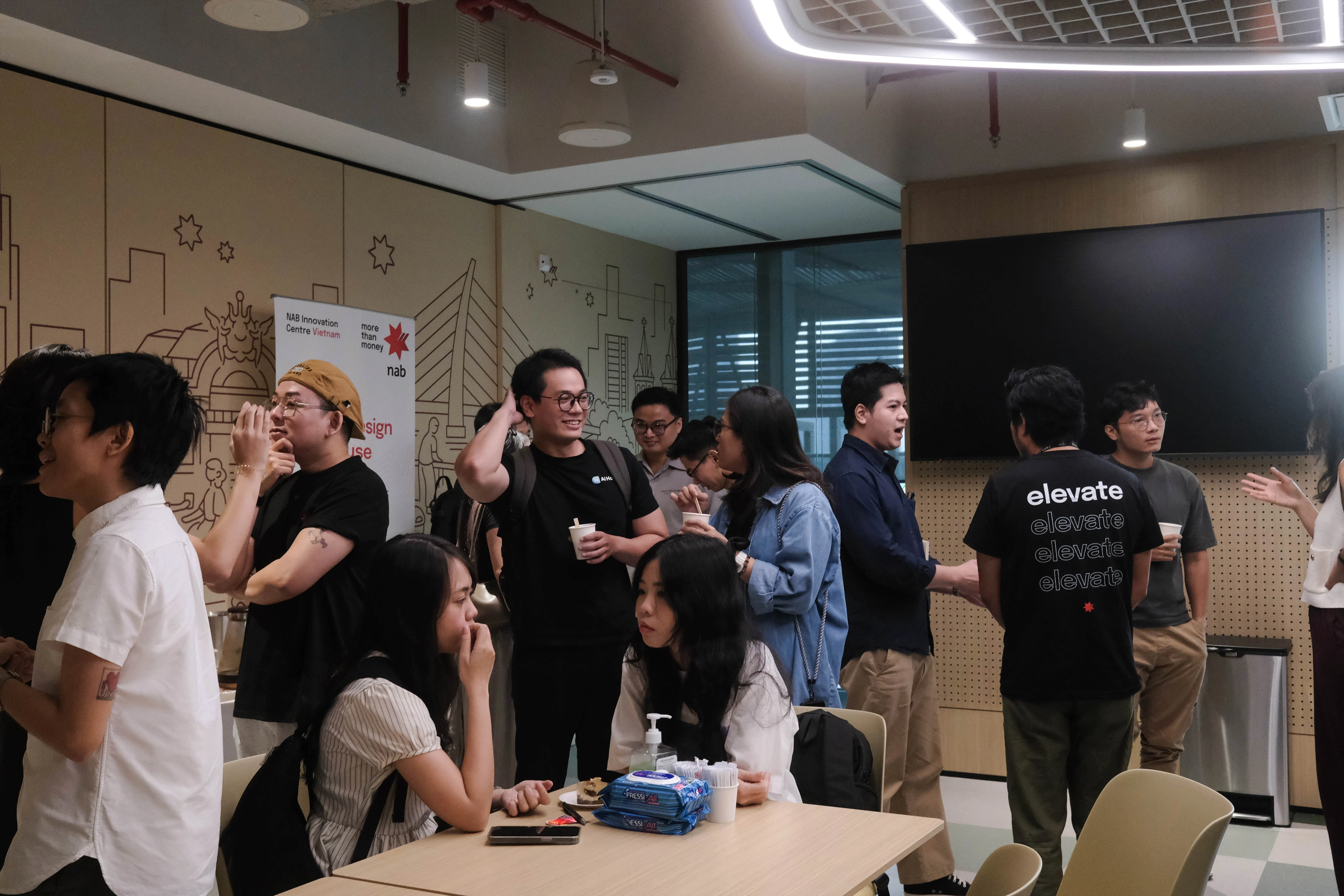
5 years ago, UI/UX was still an unfamiliar concept to many companies. Job postings and job hunting were easier back then. Now it's the opposite - everyone talks about UX, but not everyone understands what it actually is. As a result, there is a very clear polarization in the market:
The largest group: "UI/UX Designers" — which actually consists of graphic designers or people who took a 3-month bootcamp course, know how to use Figma, and have a portfolio made from YouTube tutorials. They apply for anything with "UX" in the title.
The smaller group: Designers with a real foundation — who understand research, know how to design flows and IA, and can argue the reasoning behind every design decision. This group is highly sought after but small in number.
The particularly scarce group: Product Designers with a product mindset — people who not only design beautifully but also understand business, know how to ask the right questions, and can work on equal terms with PMs instead of just receiving briefs and executing. This is the person good product companies are willing to pay a very high salary for.
Which group are you in? That answer determines where you should apply and how you should position yourself.
One thing I learned from my seniors: don't call yourself a "UI/UX Designer" on your CV. It is both generic and technically inaccurate (very few people are deeply specialized in both UI and UX at the same time), and it puts you in the same bucket with hundreds of other candidates. Calling yourself a "Product Designer", "UX Designer", or "UI Designer" is much clearer and more confident.
The skills that are truly essential in the current Vietnamese market:
Designing clear, logical flows and wireframes
Understanding IA well enough to design navigation and structure for complex products
Knowing how to organize and facilitate a simple workshop or user interview
Fast UI design (highly required in startups, small companies)
Proficiency in Figma
Being able to present and defend design decisions before stakeholders
Understanding enough about development to know what is feasible and what will make developers hate you
Another thing, the ability to communicate and write clearly in Vietnamese is much more important than many people think. In the Vietnamese market, you will have to write specs, explain design decisions via email, and chat with stakeholders. Designers who write and present poorly, even if they design well, are often evaluated below their actual capability. Fortunately, AI tools can support this part now, but you still need coherent thinking.
CV and Portfolio: The truth from someone who failed many times
I used to have a two-page CV with a fancy font, radar charts, skill ratings, etc. I thought it looked professional. In reality: it looked like an over-trying fresh graduate's resume.
One or two pages. No more is needed. If you have 5 to 10 years of experience and cannot write it concisely, that is a presentation mindset problem, not a page limit problem.
The introduction should be a 2–3 sentence paragraph clearly stating who you are and what you are good at. Not "I am a passionate designer with a creative mindset" — that sentence is completely meaningless. Write specifically: "5 years of experience designing mobile products in fintech and e-commerce. Focused on simplifying complex flows and improving conversion."
Work experience accompanied by metrics if available. "Redesigned onboarding flow, increasing completion rate from 34% to 67%" is a million times better than "Designed banking app interface."
Not every project has metrics to put in a CV. Many products are still in the MVP, internal testing phase, or haven't even launched yet. In that case, instead of writing a generic job description, focus on the problem you are solving, the scope of the challenge, and your role in the design process. Even without data, readers can still understand how you think and approach a product problem.
For junior designers in Vietnam: instead of doing redesign concepts of famous apps, find a small, real-world problem around you. Redesign the ticket booking flow of a local bus company. Design an order management app for a small coffee shop. Real problem, real constraints — hiring managers appreciate this much more.
Don't send your portfolio via email as a file that is too heavy. Don't share a Google Drive link and leave it private. Don't use Behance if you haven't updated it since 2021. If possible, invest in your own website, or a carefully crafted Notion page with links to each case study; it's simpler and more effective than anything else.
Preparing for the interview
The reality is: the quality of interview questions in Vietnam is highly uneven. Some companies, usually product companies that already have a design team, will ask very deep questions about processes, problem-solving approaches, design decisions, results, and lessons learned. But many other companies are still interviewing Product Designers as if they were interviewing Graphic Designers or Multimedia Designers.
No matter the level of the questions, you need to proactively steer the conversation toward your real UX capabilities. When they ask "tell me about a project you are proud of," don't just talk about beautiful screens; talk about the problem, the decisions, and the design trade-offs with business/technical constraints you had to face.
Questions you should prepare for
"What tools do you know how to use?" — This is usually a question from someone who doesn't understand UX. Answer briefly and then pivot the topic: "Mainly I use Figma, but more importantly, what are your expectations for how the design team should work?"
"Can you design both web and app?" — A common question at agencies and companies that do not yet have a dedicated design team. Answer honestly and set expectations right from the start.
"What is your expected salary?" In Vietnam, this question often comes up very early, right from the HR round. Don't avoid it; research the salary benchmarks for your position and level thoroughly before going to the interview.
About design challenges:
More and more Vietnamese companies are starting to require design challenges — this is a good sign, showing that they are evaluating technical expertise more seriously. Some candidates may not want to waste time doing it or fear having their ideas stolen. You should discuss this issue more clearly; most reputable companies will not use a candidate's test in a real product.
When you accept a test and the brief is too vague, proactively ask questions to clarify. And most importantly: don't just submit interface designs; attach a brief document explaining your design decisions. Most candidates don't do this, and that is your advantage.
What I learned after many interviews
Don't try to please everyone. When they ask if you can do something, replying "yes, I can do everything" doesn't help you; it only creates unrealistic expectations or suspicion from the recruiter.
Ask questions back. Not to look smart, but so you actually know what you are getting into. "How many people are currently on the design team?", "What is the workflow between design and dev?", "Who makes the final decision on designs?" — these questions tell you a lot about the actual culture of the company.
And a very realistic thing in Vietnam: the UX/product design community here is very small. Hiring managers at one company often know hiring managers at another. Don't badmouth your former company during the interview, no matter how bad they were. Talk about the reasons you want to move forward, not the reasons you want to leave.
AI and the Designer profession - Don't panic, but don't be complacent either
AI will cause most designers to be laid off. The entry barrier into the profession will be narrower for newcomers. This is the part I thought about the most this past year, and it is also the topic I saw debated most passionately in the Vietnamese designer community.
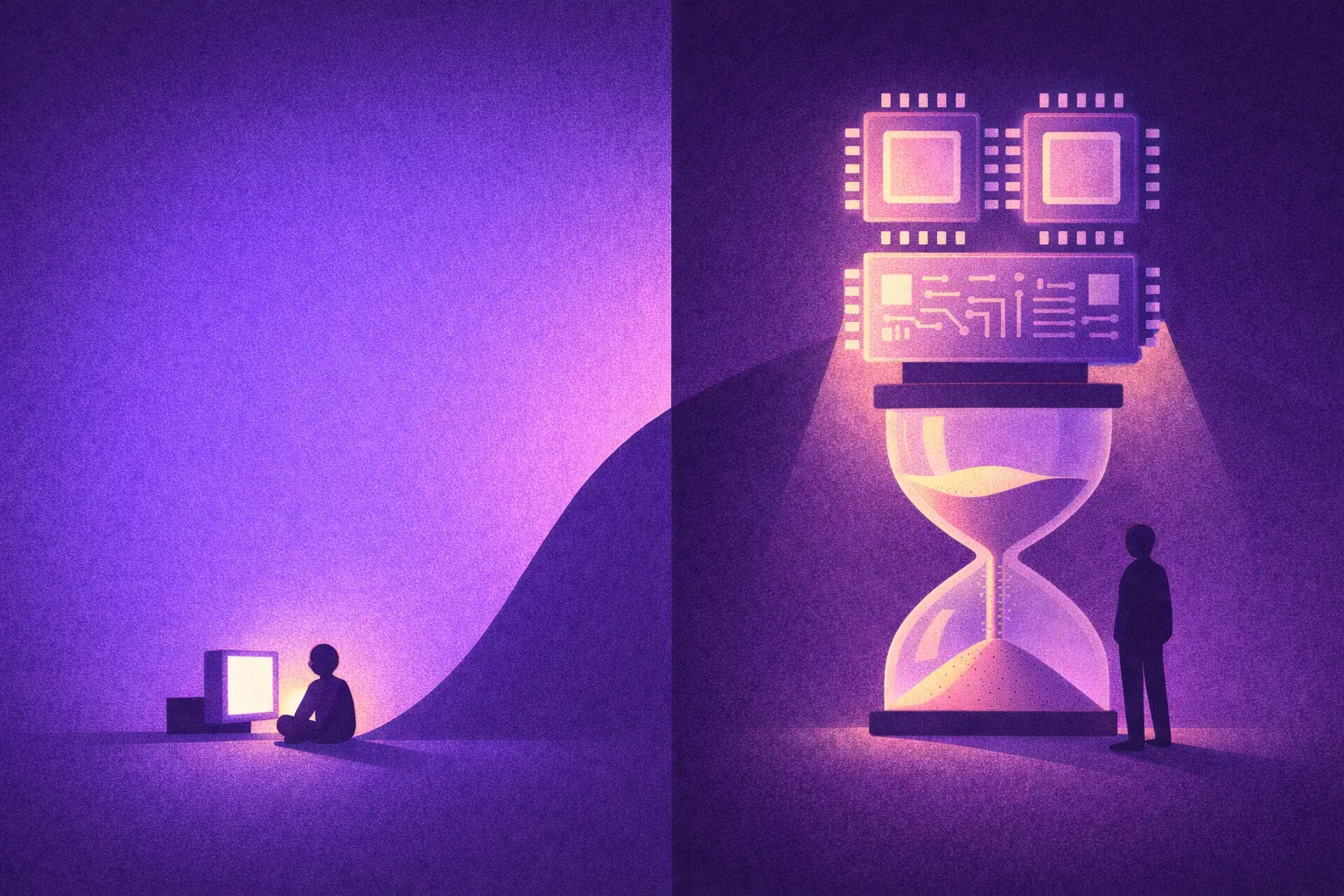
AI is changing this profession. Not "will change," but changing right now, and faster than most people are prepared for.
From the global picture to the context in Vietnam
According to Figma's latest survey of over 1,000 designers and developers, nearly 60% of product creators say AI helps them spend more time on high-value work, and nearly 70% say AI helps them increase productivity. This sounds positive, but here is the other side: more than half of hiring managers (56%) say the demand for recruiting senior designers is increasing, while only 25% are hiring for junior positions.
This reality proves that: AI is shrinking the entry point of the profession. Repetitive, low-risk tasks — which are the very things newcomers use to learn by doing and to prove their capability — are gradually shrinking. This means the path into the profession for juniors is becoming narrower, not wider.
Some companies will rely entirely on AI. Others will realize the sustainable value of deep design and invest in quality designers. You need to know which type of company you are applying to.
In Vietnam, the story has a few more layers of complexity
I recently tried asking design managers bluntly: "How is the company using AI in the design process?" The answers fell into three fairly clear groups:
Group one: "Starting to apply AI to perform some simple tasks": Usually traditional companies or small agencies. They haven't felt enough pressure to change their workflow. This environment might be more comfortable in the short term — but it also means you will fall behind in skills faster than you think.
Group two: "Encouraging and promoting designers to use it freely." Usually startups or young product companies. They are experimenting, don't have a clear process yet, but have an open mindset. This is often the best learning environment right now.
Group three: "Starting to use AI to reduce headcount." UX Writing, simple banners, quick research, wireframes, prototypes, etc., are all being optimized by companies to be replaced by AI. The answer is usually not stated so bluntly, but you can hear implicit phrases like "need a designer who can handle more roles across more projects" or "the company is optimizing processes." This is a signal you should read carefully before accepting an offer.
What is actually changing in the daily work of a designer
Previously, a large portion of a designer's time was spent on execution-type work: creating components, making variants, exporting assets, writing placeholders, building initial layouts from briefs. These tasks haven't disappeared, but AI can now do most of them in just a few minutes if described clearly.
If your work depends heavily on a specific UX technique, for example, usability testing, then in all likelihood, part of that process will be automated.
What is not easily replaced is the ability to understand users and the product context: who are they? what problem are they actually facing? and how should the interface be designed to fit that.
Therefore, what is increasingly important is not "I can make this screen in 2 hours," but rather that I understand why this screen must be designed this way, and can explain it clearly to the team and stakeholders.
Practical questions you should ask yourself right now:
Do you know what AI is doing in your place?
Are you learning to work with AI, or are you avoiding it?
What skills are you building that AI cannot replace?
A new reality between AI and Design
There are parallel waves of public opinion: one side says "AI will replace all designers," the other says "AI can never replace human creativity." Both of these arguments are oversimplified.
The reality is more complex: AI is replacing some tasks, shrinking some roles, and simultaneously creating new demands for those who know how to work in an AI environment. Someone still needs to define the problem clearly enough for AI to solve it. Someone needs to ask the right questions. And someone needs to make decisions when there is not enough data or amidst ambiguity in today's dizzyingly fast-paced changes. That will be our job.
The UX profession is not disappearing — but UX Designers who do not adapt will.
Which type of company to choose in Vietnam
In the Vietnamese market, you can basically choose between:
Agencies and design studios: This is the best place to learn quickly, especially for fresh graduates or designers transitioning fields. You will work on many types of projects, get exposure to various industries, and learn to work under realistic timeline pressures. The downside is that salaries and benefits are generally not as high as at product companies, and you will have to battle with constantly changing briefs and clients who do not understand your expertise.
Product companies (startups to scale-ups): This is an ideal environment if you want to develop a product mindset. You will work closely with PMs and devs, see the long-term impact of design decisions, and have the opportunity to build design systems from scratch. In Vietnam today, companies like First AI, Zalo, MoMo, Be, ... or fintech startups have quite high-quality design teams. Salaries are usually better than at agencies.
Corporations and traditional companies undergoing digital transformation: Salaries can be high, benefits are good, but the pace of change can be fast or slow depending on the organization and may involve office politics. You might spend more time convincing stakeholders of the value of UX than actually doing UX. Suitable if you want stability and have enough patience to change the culture from within.
Foreign companies with offices in Vietnam: Usually have more structured design processes, opportunities to learn from international colleagues, and competitive salaries. But sometimes you will find yourself as just a small branch of an overseas design team, with little voice in strategic decisions.
The real questions you should ask before accepting an offer
Who is the person I will learn the most from when working together? Not "is the boss pleasant," but "can this boss help me get better?"
Is design respected here? The easiest way to find out: ask what the workflow between design and PM is. If the answer is "PM provides wireframes, designer makes it look pretty," then you know you need to think twice.
What is the company's domain / product? What can I learn here in the next 2 years? If the answer is "not much," a 15% salary increase is not worth it.
And an additional new question: Is this company approaching AI as an opportunity or as an excuse to downsize? This question might sound a bit sensitive to ask directly in an interview, but you can observe how they talk about tools, team size, and productivity expectations. That is an important signal about the environment you are about to enter.
Conclusion
There is no single path that is right for everyone. But if you have read this far, I think you are serious about the profession, and that is already a bigger advantage than you think in a market that is still taking shape amidst the AI storm in Vietnam.
I hope you find a place worthy of your capabilities.
References
Figma - Figma's 2025 AI report: Perspectives from designers and developers. https://www.figma.com/blog/figma-2025-ai-report-perspectives/
UX Collective - AI is coming for our design jobs, but it can't touch taste. https://uxdesign.cc/ai-is-coming-for-our-design-jobs-but-it-cant-touch-taste-afd5c7a48184
Nielsen Norman Group - Why I’m Not Worried About My UX Job in the Era of AI. https://www.nngroup.com/articles/ux-job-with-ai/
In my career journey, I have applied to about a dozen companies over the past 5 years - from small agencies to foreign-funded product companies, from fintech startups to traditional corporations undergoing digital transformation. I have been rejected without a single word of explanation, received offers only to decline them, had to take IQ tests (which personally, I find completely ridiculous 🤣), and even chose the wrong company only to accept another offer after a 2-month probation period.
This article is not just theory. It consists of what I actually went through - and what I wish I had known sooner.
How does the recruitment process in Vietnam actually work?
On paper, companies usually post a process that sounds very structured. In reality, it is often much more chaotic and flexible.
In most Vietnamese companies, especially large product companies and agencies, the process typically goes through the following steps:
Submitting applications via LinkedIn / TopCV / email - for me, mostly through LinkedIn and personal referrals.
CV & portfolio review - sometimes done by HR (using AI, supporting tools, or their own experience), sometimes forwarded straight to the hiring manager.
HR screening — a 15–30 minute call asking the candidate about themselves, experience, and notice period.
Technical interview — face-to-face or via Google Meet with a lead/manager.
Design challenge — not everywhere does this, but many places are starting to.
Culture fit / final round interview — meeting the Head of Product, CTO, or Founder.
Offer and negotiation
The biggest difference compared to overseas processes is: in Vietnam, HR often plays a huge role in the early rounds - and a large percentage of HR professionals do not have a deep understanding of UX/UI or Product Design. They will ask you "what tools do you know how to use?", "do you have experience making webs / apps?", or compare you with a Graphic Design candidate.
This is not their fault (or they just don't have experience recruiting in this field yet), but you still need to understand that. Your job in the screening round is to get past that filter/HR to reach the right person who can actually evaluate your real capabilities.
Another confusing thing is that the interview timeline in Vietnam is very unpredictable. I once waited 3 weeks for feedback with no news, and when I messaged to ask, I found out the hiring manager was on a business trip, busy with year-end projects, etc. I have also received an offer just 3 days after applying (submitted on day one, interviewed the next day, and received the offer the day after). Don't let the interview waiting time affect your mentality; just apply to multiple places in parallel and proactively follow up on progress with HR.
What are recruiters actually looking for?
The short answer: Someone who can do the job, doesn't cause extra trouble for the team, and doesn't need to be retrained from scratch.
It sounds a bit pragmatic - but that is the reality of the current Vietnamese market.
Unlike foreign companies that usually have a fairly clear evaluation framework, many Vietnamese companies, even good ones, recruit largely based on the interviewer's intuition. "Looks okay," "fits well with the boss," "good to talk to," "portfolio looks decent," "background seems good" are the evaluations that actually happen behind your back.
What does that mean? It means first impressions are more important than you think; you need to proactively clarify your value very early in the conversation, without waiting for them to ask.
What is actually sought after depends on the type of company:
Startup / product company: They want self-reliant people who do not need close management, can make independent design decisions, and take responsibility for results. A beautiful portfolio is not enough — you need to be able to tell the story of the actual impact your work created.
Agency: They want someone who can do many things, quickly, without complaining much when the brief changes for the fifth time. The ability to present, convince clients to win pitches, and finalize designs is a big plus.
Corporation / traditional company: They want someone who understands processes, understands business logic, knows how to work in a multi-layered system, and doesn't make things more complicated than necessary.
Sometimes their decision has absolutely nothing to do with your competence. Maybe you are not a fit for their environment. Maybe the recruitment budget was cut. Maybe you are overqualified and they are afraid you will quit after 6 months because you are bored with the work.
What does the Designer market in Vietnam actually look like?
5 years ago, UI/UX was still an unfamiliar concept to many companies. Job postings and job hunting were easier back then. Now it's the opposite - everyone talks about UX, but not everyone understands what it actually is. As a result, there is a very clear polarization in the market:
The largest group: "UI/UX Designers" — which actually consists of graphic designers or people who took a 3-month bootcamp course, know how to use Figma, and have a portfolio made from YouTube tutorials. They apply for anything with "UX" in the title.
The smaller group: Designers with a real foundation — who understand research, know how to design flows and IA, and can argue the reasoning behind every design decision. This group is highly sought after but small in number.
The particularly scarce group: Product Designers with a product mindset — people who not only design beautifully but also understand business, know how to ask the right questions, and can work on equal terms with PMs instead of just receiving briefs and executing. This is the person good product companies are willing to pay a very high salary for.
Which group are you in? That answer determines where you should apply and how you should position yourself.
One thing I learned from my seniors: don't call yourself a "UI/UX Designer" on your CV. It is both generic and technically inaccurate (very few people are deeply specialized in both UI and UX at the same time), and it puts you in the same bucket with hundreds of other candidates. Calling yourself a "Product Designer", "UX Designer", or "UI Designer" is much clearer and more confident.
The skills that are truly essential in the current Vietnamese market:
Designing clear, logical flows and wireframes
Understanding IA well enough to design navigation and structure for complex products
Knowing how to organize and facilitate a simple workshop or user interview
Fast UI design (highly required in startups, small companies)
Proficiency in Figma
Being able to present and defend design decisions before stakeholders
Understanding enough about development to know what is feasible and what will make developers hate you
Another thing, the ability to communicate and write clearly in Vietnamese is much more important than many people think. In the Vietnamese market, you will have to write specs, explain design decisions via email, and chat with stakeholders. Designers who write and present poorly, even if they design well, are often evaluated below their actual capability. Fortunately, AI tools can support this part now, but you still need coherent thinking.
CV and Portfolio: The truth from someone who failed many times
I used to have a two-page CV with a fancy font, radar charts, skill ratings, etc. I thought it looked professional. In reality: it looked like an over-trying fresh graduate's resume.
One or two pages. No more is needed. If you have 5 to 10 years of experience and cannot write it concisely, that is a presentation mindset problem, not a page limit problem.
The introduction should be a 2–3 sentence paragraph clearly stating who you are and what you are good at. Not "I am a passionate designer with a creative mindset" — that sentence is completely meaningless. Write specifically: "5 years of experience designing mobile products in fintech and e-commerce. Focused on simplifying complex flows and improving conversion."
Work experience accompanied by metrics if available. "Redesigned onboarding flow, increasing completion rate from 34% to 67%" is a million times better than "Designed banking app interface."
Not every project has metrics to put in a CV. Many products are still in the MVP, internal testing phase, or haven't even launched yet. In that case, instead of writing a generic job description, focus on the problem you are solving, the scope of the challenge, and your role in the design process. Even without data, readers can still understand how you think and approach a product problem.
For junior designers in Vietnam: instead of doing redesign concepts of famous apps, find a small, real-world problem around you. Redesign the ticket booking flow of a local bus company. Design an order management app for a small coffee shop. Real problem, real constraints — hiring managers appreciate this much more.
Don't send your portfolio via email as a file that is too heavy. Don't share a Google Drive link and leave it private. Don't use Behance if you haven't updated it since 2021. If possible, invest in your own website, or a carefully crafted Notion page with links to each case study; it's simpler and more effective than anything else.
Preparing for the interview
The reality is: the quality of interview questions in Vietnam is highly uneven. Some companies, usually product companies that already have a design team, will ask very deep questions about processes, problem-solving approaches, design decisions, results, and lessons learned. But many other companies are still interviewing Product Designers as if they were interviewing Graphic Designers or Multimedia Designers.
No matter the level of the questions, you need to proactively steer the conversation toward your real UX capabilities. When they ask "tell me about a project you are proud of," don't just talk about beautiful screens; talk about the problem, the decisions, and the design trade-offs with business/technical constraints you had to face.
Questions you should prepare for
"What tools do you know how to use?" — This is usually a question from someone who doesn't understand UX. Answer briefly and then pivot the topic: "Mainly I use Figma, but more importantly, what are your expectations for how the design team should work?"
"Can you design both web and app?" — A common question at agencies and companies that do not yet have a dedicated design team. Answer honestly and set expectations right from the start.
"What is your expected salary?" In Vietnam, this question often comes up very early, right from the HR round. Don't avoid it; research the salary benchmarks for your position and level thoroughly before going to the interview.
About design challenges:
More and more Vietnamese companies are starting to require design challenges — this is a good sign, showing that they are evaluating technical expertise more seriously. Some candidates may not want to waste time doing it or fear having their ideas stolen. You should discuss this issue more clearly; most reputable companies will not use a candidate's test in a real product.
When you accept a test and the brief is too vague, proactively ask questions to clarify. And most importantly: don't just submit interface designs; attach a brief document explaining your design decisions. Most candidates don't do this, and that is your advantage.
What I learned after many interviews
Don't try to please everyone. When they ask if you can do something, replying "yes, I can do everything" doesn't help you; it only creates unrealistic expectations or suspicion from the recruiter.
Ask questions back. Not to look smart, but so you actually know what you are getting into. "How many people are currently on the design team?", "What is the workflow between design and dev?", "Who makes the final decision on designs?" — these questions tell you a lot about the actual culture of the company.
And a very realistic thing in Vietnam: the UX/product design community here is very small. Hiring managers at one company often know hiring managers at another. Don't badmouth your former company during the interview, no matter how bad they were. Talk about the reasons you want to move forward, not the reasons you want to leave.
AI and the Designer profession - Don't panic, but don't be complacent either
AI will cause most designers to be laid off. The entry barrier into the profession will be narrower for newcomers. This is the part I thought about the most this past year, and it is also the topic I saw debated most passionately in the Vietnamese designer community.
AI is changing this profession. Not "will change," but changing right now, and faster than most people are prepared for.
From the global picture to the context in Vietnam
According to Figma's latest survey of over 1,000 designers and developers, nearly 60% of product creators say AI helps them spend more time on high-value work, and nearly 70% say AI helps them increase productivity. This sounds positive, but here is the other side: more than half of hiring managers (56%) say the demand for recruiting senior designers is increasing, while only 25% are hiring for junior positions.
This reality proves that: AI is shrinking the entry point of the profession. Repetitive, low-risk tasks — which are the very things newcomers use to learn by doing and to prove their capability — are gradually shrinking. This means the path into the profession for juniors is becoming narrower, not wider.
Some companies will rely entirely on AI. Others will realize the sustainable value of deep design and invest in quality designers. You need to know which type of company you are applying to.
In Vietnam, the story has a few more layers of complexity
I recently tried asking design managers bluntly: "How is the company using AI in the design process?" The answers fell into three fairly clear groups:
Group one: "Starting to apply AI to perform some simple tasks": Usually traditional companies or small agencies. They haven't felt enough pressure to change their workflow. This environment might be more comfortable in the short term — but it also means you will fall behind in skills faster than you think.
Group two: "Encouraging and promoting designers to use it freely." Usually startups or young product companies. They are experimenting, don't have a clear process yet, but have an open mindset. This is often the best learning environment right now.
Group three: "Starting to use AI to reduce headcount." UX Writing, simple banners, quick research, wireframes, prototypes, etc., are all being optimized by companies to be replaced by AI. The answer is usually not stated so bluntly, but you can hear implicit phrases like "need a designer who can handle more roles across more projects" or "the company is optimizing processes." This is a signal you should read carefully before accepting an offer.
What is actually changing in the daily work of a designer
Previously, a large portion of a designer's time was spent on execution-type work: creating components, making variants, exporting assets, writing placeholders, building initial layouts from briefs. These tasks haven't disappeared, but AI can now do most of them in just a few minutes if described clearly.
If your work depends heavily on a specific UX technique, for example, usability testing, then in all likelihood, part of that process will be automated.
What is not easily replaced is the ability to understand users and the product context: who are they? what problem are they actually facing? and how should the interface be designed to fit that.
Therefore, what is increasingly important is not "I can make this screen in 2 hours," but rather that I understand why this screen must be designed this way, and can explain it clearly to the team and stakeholders.
Practical questions you should ask yourself right now:
Do you know what AI is doing in your place?
Are you learning to work with AI, or are you avoiding it?
What skills are you building that AI cannot replace?
A new reality between AI and Design
There are parallel waves of public opinion: one side says "AI will replace all designers," the other says "AI can never replace human creativity." Both of these arguments are oversimplified.
The reality is more complex: AI is replacing some tasks, shrinking some roles, and simultaneously creating new demands for those who know how to work in an AI environment. Someone still needs to define the problem clearly enough for AI to solve it. Someone needs to ask the right questions. And someone needs to make decisions when there is not enough data or amidst ambiguity in today's dizzyingly fast-paced changes. That will be our job.
The UX profession is not disappearing — but UX Designers who do not adapt will.
Which type of company to choose in Vietnam
In the Vietnamese market, you can basically choose between:
Agencies and design studios: This is the best place to learn quickly, especially for fresh graduates or designers transitioning fields. You will work on many types of projects, get exposure to various industries, and learn to work under realistic timeline pressures. The downside is that salaries and benefits are generally not as high as at product companies, and you will have to battle with constantly changing briefs and clients who do not understand your expertise.
Product companies (startups to scale-ups): This is an ideal environment if you want to develop a product mindset. You will work closely with PMs and devs, see the long-term impact of design decisions, and have the opportunity to build design systems from scratch. In Vietnam today, companies like First AI, Zalo, MoMo, Be, ... or fintech startups have quite high-quality design teams. Salaries are usually better than at agencies.
Corporations and traditional companies undergoing digital transformation: Salaries can be high, benefits are good, but the pace of change can be fast or slow depending on the organization and may involve office politics. You might spend more time convincing stakeholders of the value of UX than actually doing UX. Suitable if you want stability and have enough patience to change the culture from within.
Foreign companies with offices in Vietnam: Usually have more structured design processes, opportunities to learn from international colleagues, and competitive salaries. But sometimes you will find yourself as just a small branch of an overseas design team, with little voice in strategic decisions.
The real questions you should ask before accepting an offer
Who is the person I will learn the most from when working together? Not "is the boss pleasant," but "can this boss help me get better?"
Is design respected here? The easiest way to find out: ask what the workflow between design and PM is. If the answer is "PM provides wireframes, designer makes it look pretty," then you know you need to think twice.
What is the company's domain / product? What can I learn here in the next 2 years? If the answer is "not much," a 15% salary increase is not worth it.
And an additional new question: Is this company approaching AI as an opportunity or as an excuse to downsize? This question might sound a bit sensitive to ask directly in an interview, but you can observe how they talk about tools, team size, and productivity expectations. That is an important signal about the environment you are about to enter.
Conclusion
There is no single path that is right for everyone. But if you have read this far, I think you are serious about the profession, and that is already a bigger advantage than you think in a market that is still taking shape amidst the AI storm in Vietnam.
I hope you find a place worthy of your capabilities.
References
Figma - Figma's 2025 AI report: Perspectives from designers and developers. https://www.figma.com/blog/figma-2025-ai-report-perspectives/
UX Collective - AI is coming for our design jobs, but it can't touch taste. https://uxdesign.cc/ai-is-coming-for-our-design-jobs-but-it-cant-touch-taste-afd5c7a48184
Nielsen Norman Group - Why I’m Not Worried About My UX Job in the Era of AI. https://www.nngroup.com/articles/ux-job-with-ai/
RELATED ARTICLE
RELATED ARTICLE
RECENT POST


ACCESSIBILITY
I believe that good design should be for everyone and am always committed to providing the most accessible experience. If you have trouble accessing the website, feel free to leave me a message.
NOTE
Website Design and Development by Toan Nguyen. Using the font Space Gortek (Colophon Foundry); Newseader (Production Type). Built on the Framer platform.
Copyright © 2018 – 2025 Toan Nguyen
ACCESSIBILITY
I believe that good design should be for everyone and am always committed to providing the most accessible experience. If you have trouble accessing the website, feel free to leave me a message.
NOTE
Website Design and Development by Toan Nguyen. Using the font Space Gortek (Colophon Foundry); Newseader (Production Type). Built on the Framer platform.
Copyright © 2018 – 2025 Toan Nguyen
ACCESSIBILITY
I believe that good design should be for everyone and am always committed to providing the most accessible experience. If you have trouble accessing the website, feel free to leave me a message.
NOTE
Website Design and Development by Toan Nguyen. Using the font Space Gortek (Colophon Foundry); Newseader (Production Type). Built on the Framer platform.
Copyright © 2018 – 2025 Toan Nguyen