Ratings and reviews: UX/UI design tips for review systems
Ratings and reviews are important tools, not only for building trust but also for providing valuable information to both customers and businesses


From the perspective of user psychology
Human beings are social creatures by nature. We are only human, and the wish and the need to be accepted by a group are an essential part of how we behave. And to be accepted by the others in a group, we need to follow similar patterns of behavior. The concept of Social Validation shows that when a product is recommended by friends or family, consumers tend to trust that choice without looking into it deeply. This underlines how important ratings and reviews are in building customer trust. You could say they are a powerful marketing tool for earning your product the confidence of customers.
The impact of reviews on e-commerce
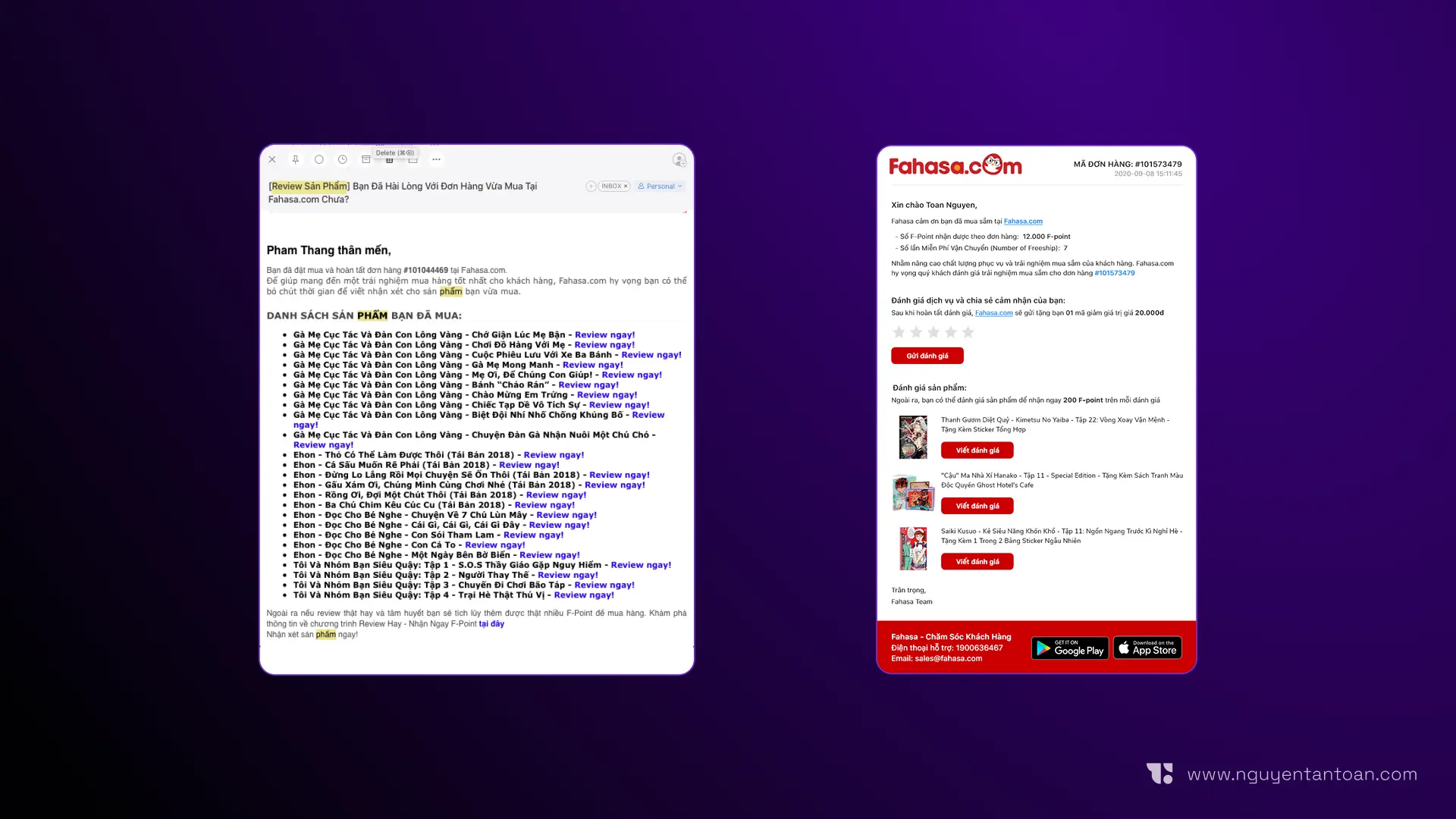
When a user completes an order, we send an order confirmation email along with a prompt to rate the quality of the product and the service. Why do it this way?
Because it is not just a marketing strategy, it is also a valuable data-gathering tool for the business. You can learn whether customers are satisfied with your product and what makes them satisfied. And if they are not, that gives you the chance to fix the problem and improve your service, which is very important for retaining loyal customers. What's more, satisfied customers are not only likely to come back, they also tend to recommend the product to their friends, creating a positive loop for the brand.
So what is the best way to improve a rating and review system? How can a brand use its power to retain existing customers and persuade potential ones? Let's find out in the rest of this article!
1. Send a rating and review request by email after a successful purchase
Instead of waiting for users to go looking for their order or the product they bought, send a review request by email and direct them to your store to leave a review. It is important that your review request email stands out from the crowd. In today's fast-changing world, our attention span is under pressure from many other marketing channels. Here are a few considerations we apply to improve our product review request emails.
- An email design consistent with the brand: Brand consistency is crucial to the success of all marketing activity, because it helps you build brand awareness and establish trust between customers and the brand.
- Keep the layout simple: Simple design does not mean sloppy design. It is how you deliberately optimize your design, especially when you are designing content for a space as limited as an email. Try not to overwhelm customers with too many elements in your email.
- Keep the message short, engaging and personalized: A short, engaging message contributes a great deal to the success of your marketing campaign. Start your email with a friendly greeting and get straight to the point of why your customer is receiving it.
2. Encourage customers to review the product
You use the ratings and reviews of your existing customers to create a positive influence on new customers in the future.
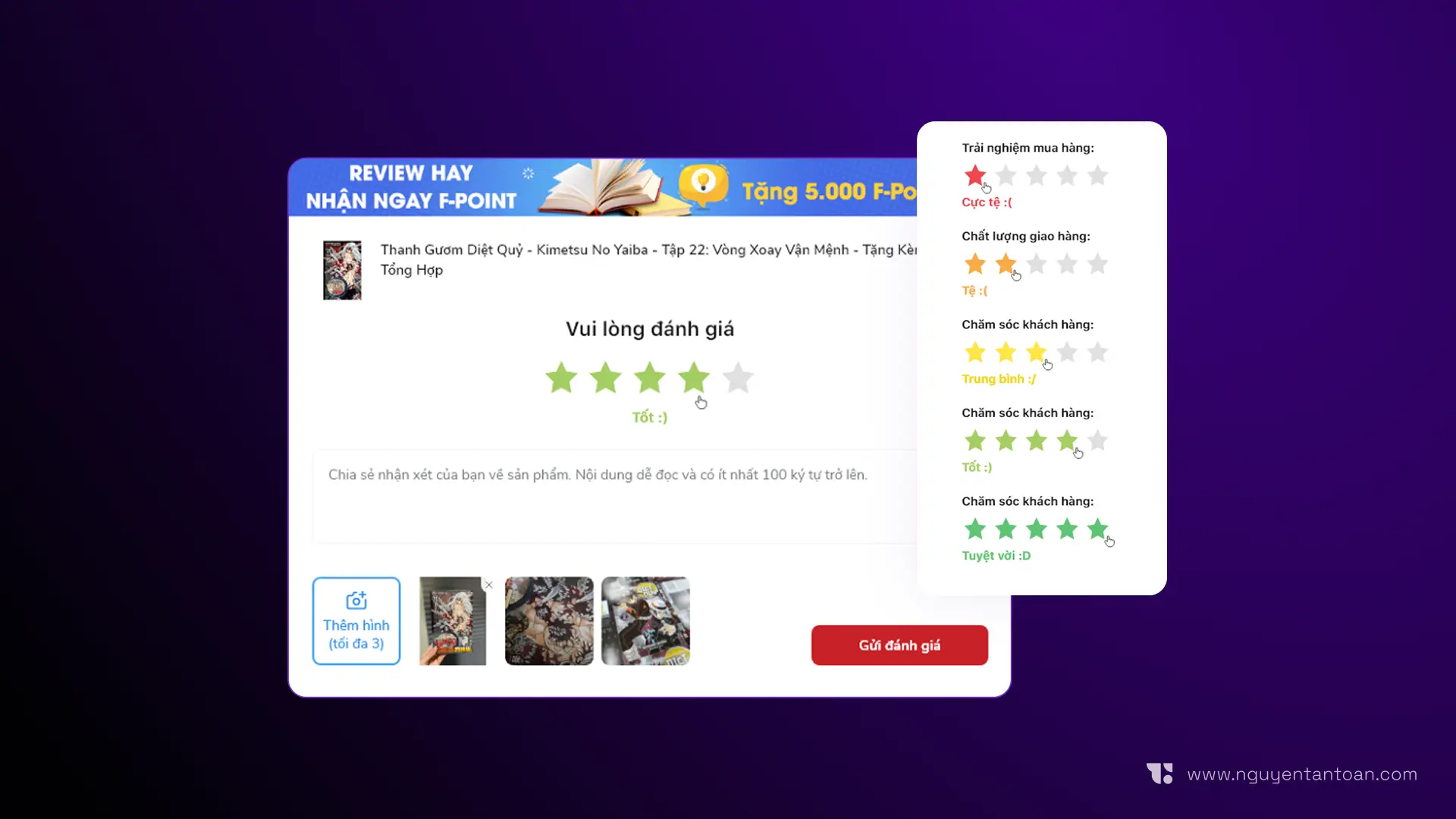
Give your customers some extra motivation to leave a review. But hold on, there is something that needs to be made clear here: you are not bribing customers to get good reviews. That is not good, it is unethical, and it can make things messy in ways you never intended. Instead, you are simply giving them an incentive to leave a review.
To repeat it once more: encourage customers to leave a "review", not a "good review". You will hope that customers rate you well, but you should not manipulate them while you are encouraging them.
In practice, you should also consider the possibility that your product may receive negative reviews. A rating system of 1-5 stars (commonly used in e-commerce) makes it easy for users to leave their opinion about a specific item. Offering an incentive helps improve the product review experience, and if customers are satisfied, they will tend to leave more positive reviews.
3. A summary view of product review information
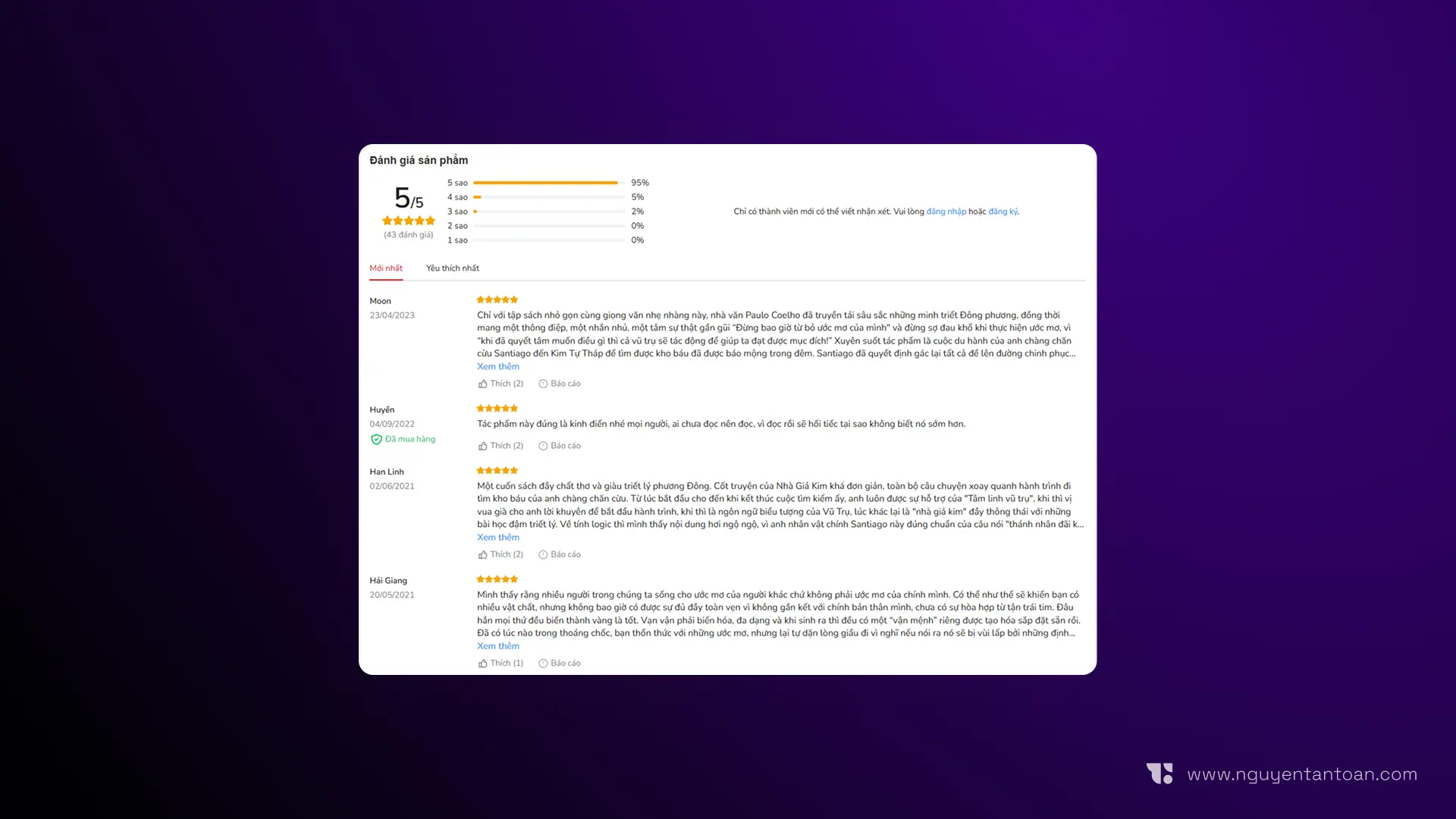
Users rely on summary information to get the overall picture of the product being reviewed. After checking it, they may pick a few reviews to read in more depth.
Not providing a UI that shows the rating distribution easily misleads users in two different ways:
- If users see only overwhelmingly positive reviews on the first page of the review section, they sometimes suspect that those reviews are fake.
- If users see mostly negative reviews displayed first, they assume the product is poorly rated, when in fact the opposite is true.
In both cases, the end result is that users misread the product reviews, which leads them to dismiss products they consider "not transparent" and turn to a product or service they find more trustworthy. Having a review summary at the top of the review section can help users understand the product better at a glance. It can include:
- A focus on service, quality, product information and so on, or any other attribute related to the product
- The most popular or most helpful reviews, and the negative ones. When they reach the review section, many people look for the most negative reviews to learn about the product's shortcomings. When you provide this information up front, you save users time.
- A 1-5 star rating system.
4. Let users filter and sort reviews
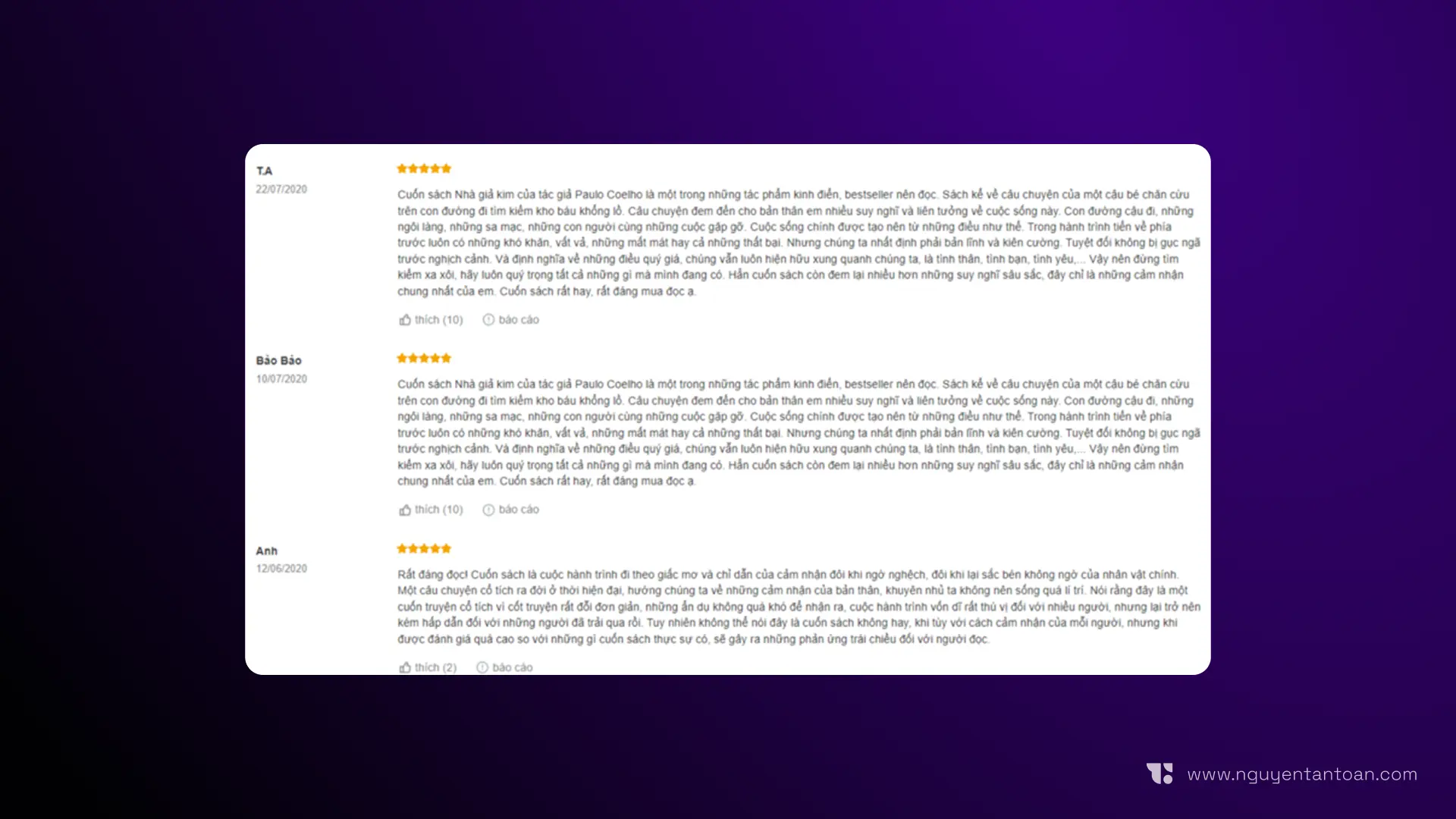
Let users filter and sort reviews. Make sure these filters are easy to find and to recognize on the page. Search filters such as "Newest", "Most liked" or "Verified purchase" ensure that users can easily find the reviews that are relevant to them.
Conclusion
Ratings and reviews are important tools, not only for building trust but also for providing valuable information to both customers and businesses. To make the most of them, make sure reviews are trustworthy, easy to access and clearly presented. Designing a user-friendly interface makes it easier for customers to make smarter purchase decisions. I hope this article helps you design a more effective rating and review system!