Finding a product designer job in Vietnam: what I learned after many applications
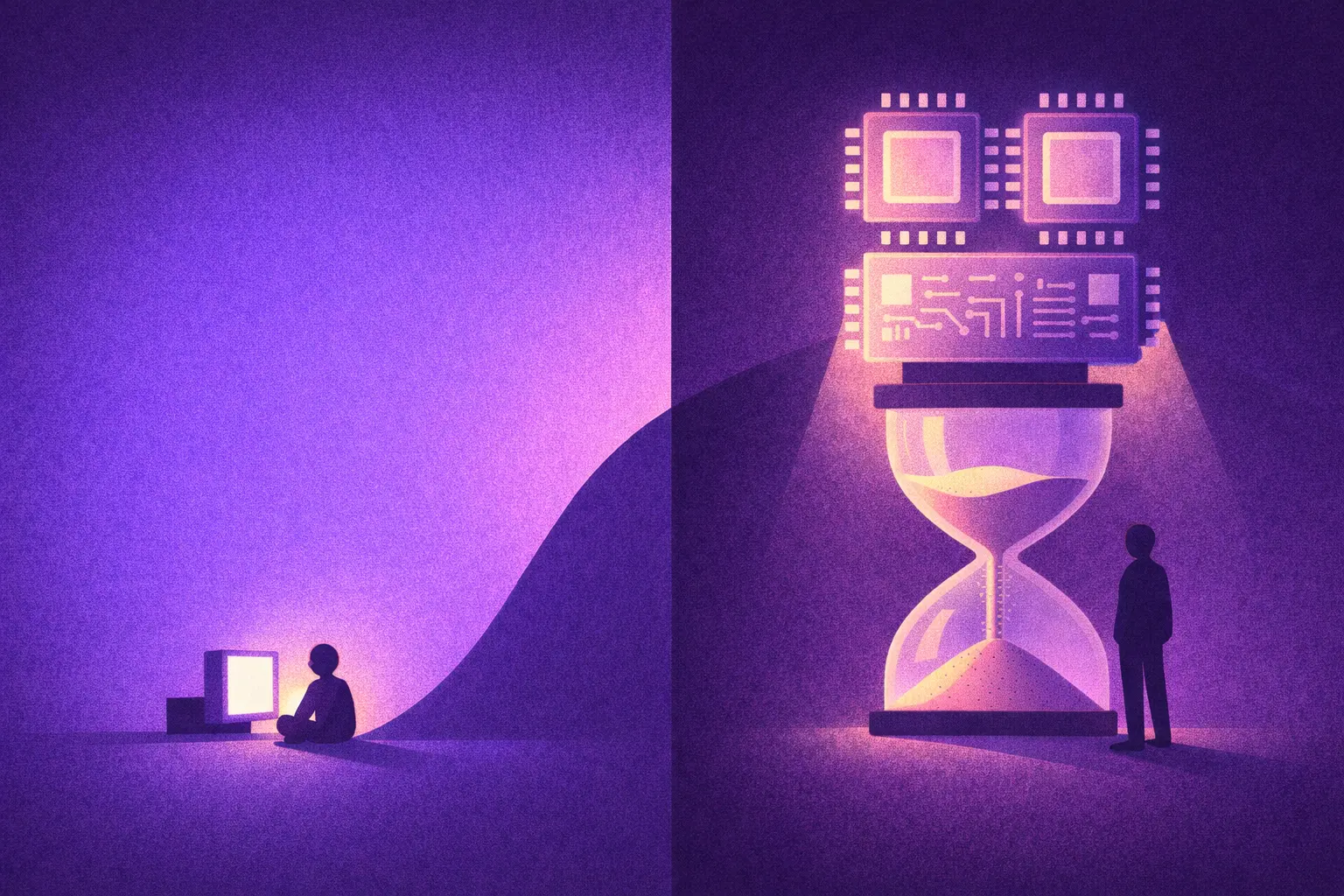
Vietnam's UX market is splitting sharply, the door into the profession is narrowing because of AI, and employers hire on gut feeling more than you might think. Understanding the real rules of the game is a big advantage you can prepare as you look for a job that fits you.


Over the course of my career, I have applied to about a dozen companies in the past 5-plus years - from small agencies to foreign-backed product companies, from fintech startups to traditional corporations going through digital transformation. I have been rejected without a word of explanation, received offers and turned them down, been made to take an IQ test (personally, I find this utterly ridiculous 🤣), and once picked the wrong company, only to accept a different offer two months into my probation period.
This article is not just theory. It covers what I actually went through - and what I wish I had known sooner.
How does the hiring process in Vietnam actually work?
On paper, companies usually publish a process that sounds very structured. In reality it is often far messier and more flexible.
At most Vietnamese companies, especially product companies and large agencies, the process usually goes through these steps:
- Applying via LinkedIn / TopCV (a popular Vietnamese job site) / email - for me it has mostly been LinkedIn and referrals from people I know.
- Resume and portfolio review - sometimes done by HR (using AI, supporting tools, or their own experience), sometimes passed straight to the hiring manager
- HR screening - a 15-30 minute call asking the candidate about themselves, their experience, and when they could start
- Skills interview - in person or over Google Meet with a lead or manager
- Design challenge - not everywhere has one, but many places are starting to
- Culture interview / final round - meeting the Head of Product, CTO, or Founder as well
- Offer and negotiation
The biggest difference from hiring processes abroad is this: in Vietnam, HR usually plays a very large role in the early rounds - and a large share of HR people do not have a deep understanding of UX/UI or product design. They will ask you "which tools can you use?", "do you have experience with web / app work?", or compare you with a candidate who does graphic design.
That is not their fault (or they simply haven't had experience hiring in this field yet), but you still need to understand it. Your job in the screening round is to get past that filter, past HR, and reach the right person, the one who can assess your real ability.
Another thing that causes anxiety is that interview timelines in Vietnam are very hard to predict. I once waited 3 weeks for feedback with no news, and only when I messaged to ask did I learn that the hiring manager was on a business trip, busy with a year-end project, and so on. I have also received an offer just 3 days after applying (applied on day one, interviewed the next day, and got the offer the day after the interview). Don't let the waiting get into your head. Keep applying to several places in parallel and proactively follow up with HR on progress.
What are employers really looking for?
The short answer: Someone who can get the work done, doesn't create extra trouble for the team, and doesn't need to be taught from scratch.
It sounds a bit pragmatic - but that is the truth of the Vietnamese market right now.
Unlike foreign companies, which usually have a fairly clear evaluation framework, many Vietnamese companies, including good ones, hire largely on the interviewer's gut feeling. "Seems fine", "gets along with the boss", "easy to talk to", "portfolio looks okay", "background seems good" - these are assessments that really are made behind your back.
What does that mean? It means first impressions matter more than you think. You need to proactively make your value clear very early in the conversation, not wait until they ask.
What is actually being looked for depends on the type of company:
- Startups / product companies: They want someone autonomous who doesn't need close supervision, can make design decisions independently and takes responsibility for the outcome. A beautiful portfolio is not enough - you need to be able to tell the story of the real impact your work created.
- Agencies: They want someone who can do many things, fast, without complaining much when the brief changes for the fifth time. The ability to present and persuade clients, to win pitches and get designs signed off, is a big plus.
- Corporations / traditional companies: They want someone who understands process, understands the business domain, knows how to work within a multi-layered system, and doesn't make things more complicated than they need to be.
Sometimes their decision has nothing at all to do with your ability. Maybe you are not yet a fit for their environment. Maybe the hiring budget was cut. Maybe you are too good, and they are afraid you will leave after 6 months out of boredom.
What does the designer market in Vietnam really look like?
Five years ago, UI/UX was still an unfamiliar concept to many companies. There were plenty of job postings, and finding work was easier. Now it is the reverse - everyone talks about UX, but not everyone understands what it really is. The result is a very clear split in the market:
The largest group: the "UI/UX Designer" - in reality a graphic designer or someone who took a 3-month bootcamp, knows how to use Figma, and has a portfolio built by following YouTube tutorials. They apply to anything with "UX" in the title.
A smaller group: designers with a real foundation - they understand research, know how to design flows and IA, and can argue the reasoning behind every design decision. This group is in high demand but few in number.
An especially scarce group: product designers with product thinking - people who don't just design beautifully but also understand the business, know how to ask the right questions, and can work as peers with PMs instead of just taking a brief and executing. These are the people good product companies are willing to pay very well.
Which group are you in? That answer determines where you should apply and how you should position yourself.
One thing I learned from those who came before me: don't call yourself a "UI/UX Designer" on your resume. It is generic, it is professionally inaccurate (very few people are deeply skilled at both UI and UX at once), and it puts you in the same basket as hundreds of other candidates. Call yourself a "Product Designer", "UX Designer" or "UI Designer" - clearer and more confident.
The skills that are really needed in the Vietnamese market right now:
- Designing clear, logical flows and wireframes
- Understanding IA well enough to design navigation and structure for complex products
- Knowing how to organize and facilitate a simple workshop or user interview
- Designing UI fast (needed quite a lot at startups and small companies)
- Being fluent in Figma
- Being able to present and defend design decisions in front of stakeholders
- Understanding enough about development to know what is feasible and what will make developers hate you
One more thing: the ability to communicate and write clearly in Vietnamese matters more than many people think. In the Vietnamese market you will have to write specs, explain design decisions over email, and chat with stakeholders. Designers who write and present poorly, even if they design well, are often rated below their real ability. Fortunately, AI tools can now help with this part, but you still need to think coherently.
Resume and portfolio: the truth from someone who got it wrong many times
I once had a two-page resume with a fancy font, a radar chart, skill scores and so on to show off my abilities. I thought it looked professional. In reality, it looked like the work of a fresh graduate trying too hard.
One or two pages. No more than that. If you have 5-10 years of experience and can't write it up concisely, that is a problem with how you structure your thinking, not a problem with the page limit.
The opening is a 2-3 sentence paragraph that says clearly who you are and what you are good at. Not "I am a passionate designer with a creative mindset", a sentence that is completely meaningless. Be specific: "5 years designing mobile products in fintech and e-commerce. Focused on simplifying complex flows and improving conversion."
Work experience, with numbers if you have them. "Redesigned the onboarding flow, raising completion rate from 34% to 67%" is a million times better than "Designed the interface for a banking app."
Not every project has metrics you can put on a resume. Many products are still at the MVP stage, in internal testing, or haven't even launched yet. In that case, instead of writing a generic job description, focus on the problem you were solving, the scope of the challenge and your role in the design process. Even without numbers, the reader can still understand how you think and how you approach a product problem.
For junior designers in Vietnam: instead of doing redesign concepts of famous apps, find a small real-world problem in the life around you. Redesign the booking flow for a local intercity bus company. Design an order management app for a small coffee shop. A real problem with real constraints is something hiring managers value far more.
Don't email your portfolio as an oversized file. Don't share a Google Drive link and leave it private. Don't use Behance if you haven't updated it since 2021. If you can, invest in a website of your own, or a carefully built Notion page with links to each case study. That is simpler and more effective than anything else.
Preparing for interviews
The reality is that the quality of interview questions in Vietnam is very uneven. Some companies, usually product companies that already have a design team, will ask very deep questions about process, how you approach problems, design decisions, results and lessons learned. But many other companies are still interviewing product designers the way they would interview graphic designers or multimedia designers.
Whatever the level of the questions, you need to proactively steer the story toward your real UX ability. When they ask "tell me about a project you're proud of", don't just talk about beautiful screens. Talk about the problem, the decisions, and the trade-offs between design and business or technical constraints that you had to face.
Questions you should prepare for
- "What tools do you know how to use?" - This is usually a question from someone who doesn't understand UX. Answer briefly, then change the subject: "I mainly use Figma, but more importantly, how do you expect the design team to work?"
- "Can you design for both web and app?" - A common question at agencies and at companies that don't yet have a dedicated design team. Answer honestly and reset expectations right from the start.
- "What salary are you expecting?" In Vietnam this question usually comes up very early, right in the HR round. Don't dodge it. Research the salary benchmark for your position and level thoroughly before you go to the interview.
On design challenges:
More and more Vietnamese companies are starting to require a design challenge - a good sign, showing that they are assessing professional skills more seriously. Some candidates won't want to spend the time on it or will worry about having their ideas stolen. You should discuss this openly with the company. Most reputable companies will not use a candidate's test in their real product.
Once you have accepted the test, if the brief is too vague, proactively ask questions to clarify it. And most importantly: don't just submit the interface design. Include a short document explaining your design decisions. Most candidates don't do this, and that is your advantage.
What I learned after many interviews
Don't try to please everyone. When they ask whether you can do something, the answer "yes, I can do it all" doesn't help you. It only creates unrealistic expectations, or wariness, on the employer's side.
Ask questions back. Not to look smart, but so that you really know what you are walking into. "How many people are on the design team right now?", "How does the workflow between design and dev run?", "Who makes the final call on design?" - questions like these tell you a great deal about the company's real culture.
And one very practical thing about Vietnam: the UX and product design community here is very small. The hiring manager at one company usually knows the hiring manager at another. Don't badmouth your former company in an interview, however bad it was. Talk about why you want to move forward, not why you want to leave.
AI and the design profession: don't panic, but don't be complacent either
AI will get most designers laid off. The door into the profession will be narrower for newcomers. This is the part I have thought about most over the past year, and also the part I see the Vietnamese designer community debating most heatedly.
AI is changing this profession. Not "will change" but is changing, right now, and faster than most people are prepared for.
From the global picture to the Vietnamese context
According to Figma's latest survey of more than 1,000 designers and developers, nearly 60% of people who build products say AI helps them spend more time on high-value work, and nearly 70% say AI makes them more productive. That sounds positive, but here is the other side: more than half of hiring managers (56%) say demand for senior designers is rising, while only 25% are hiring more for junior positions.
What this shows is that AI is shrinking the entry point to the profession. The repetitive, low-risk tasks, the very things newcomers learn by doing and use to prove their ability, are steadily disappearing. That means the path into the profession for juniors is getting narrower, not wider.
Some companies will rely entirely on AI. Others will recognize the lasting value of design with depth and invest in quality designers. You need to know which type of company you are applying to.
In Vietnam, the story has a few more layers
Recently I tried asking design managers directly: "How is the company using AI in its design process?" The answers fell into three fairly clear groups:
Group one: "We're starting to apply AI to a few simple tasks": Usually traditional companies or small agencies. They are not yet under enough pressure to change their workflow. This environment may be more comfortable in the short term - but it also means your skills will fall behind faster than you think.
Group two: "We encourage and push designers to use it freely". Usually startups or young product companies. They are experimenting and have no clear process yet, but they have an open spirit. This is usually the best learning environment right now.
Group three: "We're starting to use AI to reduce headcount". UX writing, simple banners, quick research, wireframes, prototypes and more are all being optimized by companies so they can be replaced with AI. The answer usually isn't stated that bluntly, but you may hear hints such as "we need a designer who can cover more roles across more projects" or "the company is optimizing its processes". This is a signal you should read carefully before accepting an offer.
What is really changing in a designer's day-to-day work
In the past, a large part of a designer's time went to execution work: creating components, making variants, exporting assets, writing placeholders, building the initial layout from a brief. These tasks haven't disappeared, but AI can now do most of them in just a few minutes if given a clear description.
If your job depends heavily on one specific UX technique, usability testing for example, then there is a high chance that part of that process will be automated.
What is not easy to replace is the ability to understand users and the product context: who are they? what problem are they really facing? and how should the interface be designed to fit?
So what matters more and more is not "I can produce this screen in 2 hours", but that I understand why this screen has to be designed this way, and can explain it clearly to the team and to stakeholders.
Practical questions you should be asking yourself right now:
- Do you know what AI is already doing in your place?
- Are you learning how to work with AI, or are you avoiding it?
- Which skills are you building that AI cannot replace?
The new reality between AI and design
Two waves of opinion are running side by side: one says "AI will replace all designers", the other says "AI will never replace human creativity". Both arguments are oversimplifications.
The reality is more complicated: AI is replacing some tasks, shrinking some roles, and at the same time creating new demand for people who know how to work in an AI environment. Someone still needs to define the problem clearly enough for AI to solve it. Someone needs to ask the right questions. And someone needs to make decisions when the data is incomplete or things are unclear amid change as dizzyingly fast as today's. That will be our job.
The UX profession is not disappearing - but UX designers who refuse to adapt will.
Which type of company to choose in Vietnam
In the Vietnamese market, you can basically choose between:
Agencies and design studios: The best place to learn fast, especially for designers new to the profession or changing direction. You will work on many kinds of projects, be exposed to many different industries, and learn to work under the pressure of real timelines. The downsides are that pay and bonuses are mostly not as high as at product companies, and you will have to battle constantly changing briefs and clients who don't understand your expertise.
Product companies (startup to scale-up): The ideal environment if you want to develop product thinking. You will work closely with PMs and devs, see the long-term impact of design decisions, and have the chance to build a design system from scratch. In Vietnam today, companies like First AI, Zalo (messaging), MoMo (e-wallet), Be (ride-hailing) and others, as well as fintech startups, have fairly strong design teams. Pay is usually better than at agencies.
Corporations and traditional companies going through digital transformation: Pay can be high and benefits good. The pace of change may be fast or slow depending on the organization, and office politics may come into your work. You may spend more time convincing stakeholders of the value of UX than actually doing UX. A good fit if you want stability and have enough patience to change the culture from the inside.
Foreign companies with offices in Vietnam: They usually have a more structured design process, opportunities to learn from international colleagues, and competitive pay. But sometimes you will find that you are just a small branch of a design team abroad, with little say in strategic decisions.
The questions you should really ask before accepting an offer
Who will I learn the most from by working with them? Not "is the boss pleasant", but "can this boss help me get better?"
Is design respected here? The easiest way to find out: ask what the workflow between design and PM looks like. If the answer is "the PM hands over wireframes, the designer makes them pretty", you know you need to think again.
What is the company's domain / product? What can I learn here over the next 2 years? If the answer is "not much", an extra 15% in salary is not worth it.
And one more new question: is this company approaching AI as an opportunity or as an excuse to cut? This question may sound a little sensitive to ask directly in an interview, but you can observe it through how they talk about tools, about team size, about productivity expectations. That is an important signal about the environment you are about to step into.
Conclusion
No path is right for everyone. But if you have read this far, I think you are serious about the profession, and that is already a bigger advantage than you think in a market that is still taking shape amid the AI storm in Vietnam.
I hope you find a place worthy of your ability.
References
Figma - Figma's 2025 AI report: Perspectives from designers and developers. https://www.figma.com/blog/figma-2025-ai-report-perspectives/
UX Collective - AI is coming for our design jobs, but it can't touch taste. https://uxdesign.cc/ai-is-coming-for-our-design-jobs-but-it-cant-touch-taste-afd5c7a48184
Nielsen Norman Group - Why I'm Not Worried About My UX Job in the Era of AI. https://www.nngroup.com/articles/ux-job-with-ai/