Why did sneaker hype fade? A user experience perspective
One day an old photo of a pair of "hype" sneakers resurfaced in my Facebook feed and left me with a question: why did something that was once a whole generation's obsession quietly fade away? Let's dig a little deeper and look for the answer through the lens of user experience and behavioral psychology.

The sneaker hype movement in Vietnam is a perfect case study of a "social product" that was designed too well to fail, and too well not to destroy itself.
This post shares my thoughts on how sneaker culture in Vietnam has changed, seen through the lens of user experience (UX) and behavioral psychology. It focuses on factors like social signaling, trust and the need for self-expression. External factors such as the post-pandemic economy, speculation or the resale market are not covered in depth.
Sneakers - more than just shoes
In Vietnam between 2017 and 2020, sneakers went far beyond the job of an ordinary pair of shoes and became a hugely influential cultural symbol among young people. A pair of sneakers was no longer just something you wore on your feet. It was a signal: a way to express yourself, to assert your status, and to place yourself within an informal social order.
Through the lens of UX and behavioral psychology, the rise and fall of sneaker hype is not simply a fashion story. It is a textbook case study in social signaling - the way people use products as tools to project an image of themselves to the world around them.
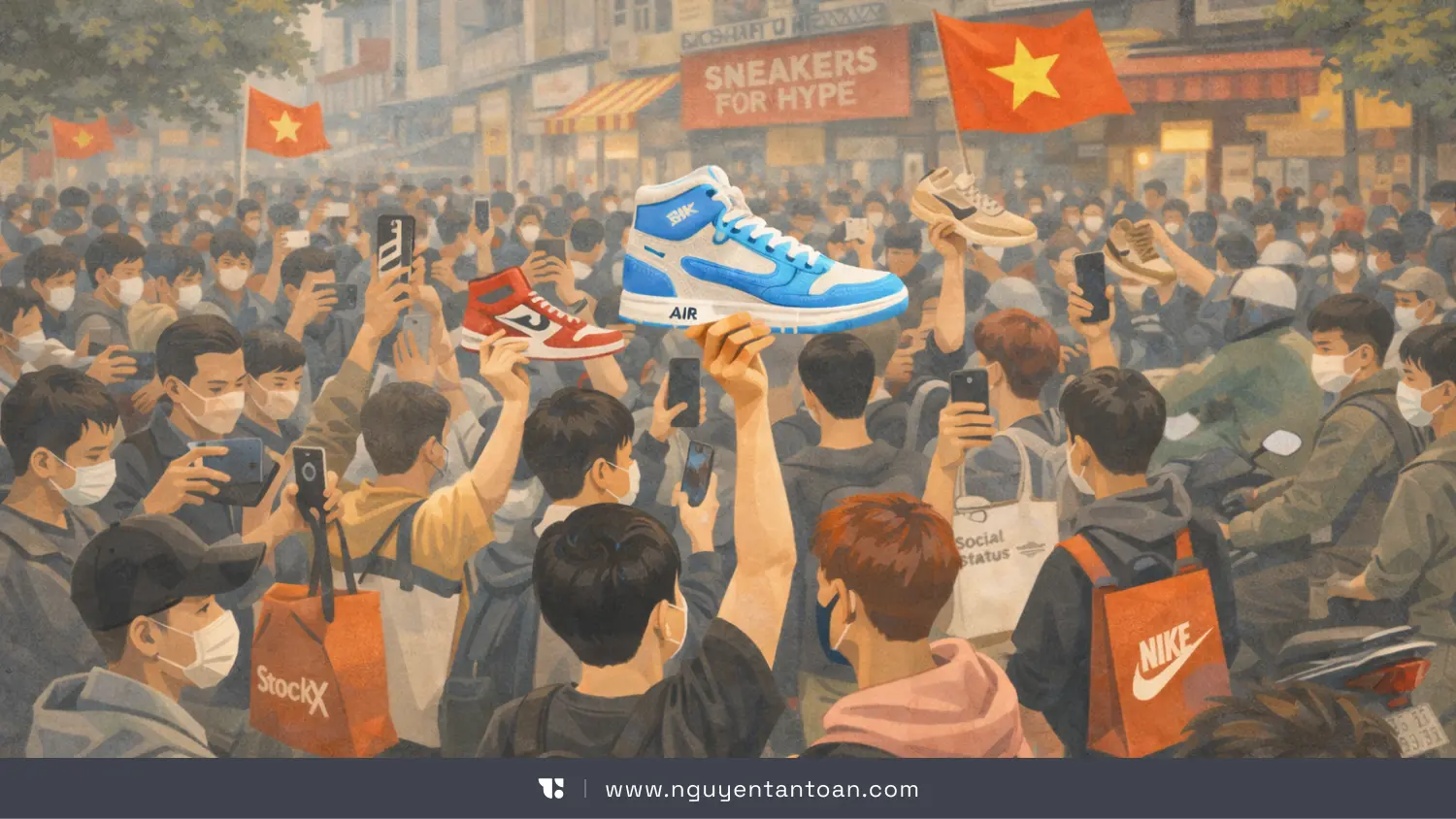
A social interface for presenting ourselves
At their core, sneakers (and the whole outfit, of course) work like a user interface layered over the human body. Every time we step outside, we unconsciously present an image of ourselves for others to read. Clothes, shoes, accessories: all of it works as a set of signals that helps the people around us guess who we are, which group we belong to, and how we want to be seen.
A pair of Jordans or Yeezys used to work like a familiar icon: one glance and you knew what the wearer was trying to say. I'm on trend. I have money. I have taste. I'm in the game. Because they were so easy to read, hype sneakers once had excellent UX. They kept cognitive load (how hard someone has to think to make sense of what they see) to a minimum for the viewer. No need to ask, no need to investigate. The signal came through clearly in a few tenths of a second.
The peak of social ROI
*ROI stands for Return On Investment: what you get back relative to what you put in.
At the peak, a single pair of "hype" sneakers could say everything. The money spent was far from small, but the social value the owner got back was many times greater. It might be admiring looks, recognition from the community, or the special feeling of belonging to the group of people who are "in the know."
In experience terms, this was the moment when the emotional and status "return" was at its highest relative to the "capital" invested. Buyers felt their decision was completely worth it, because the intangible social reward far outweighed the tangible financial cost.
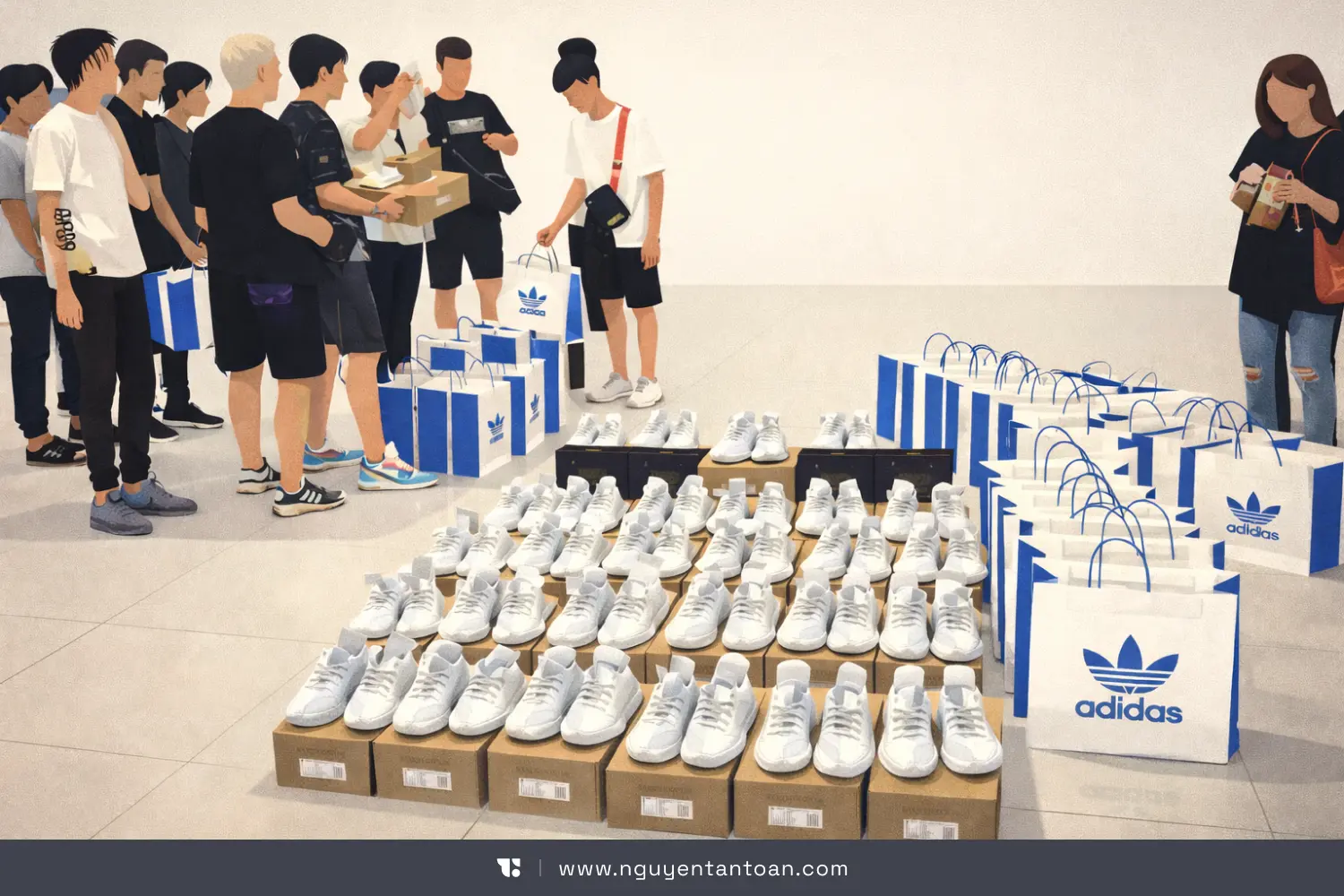
When the signal is overused and the experience starts to collapse
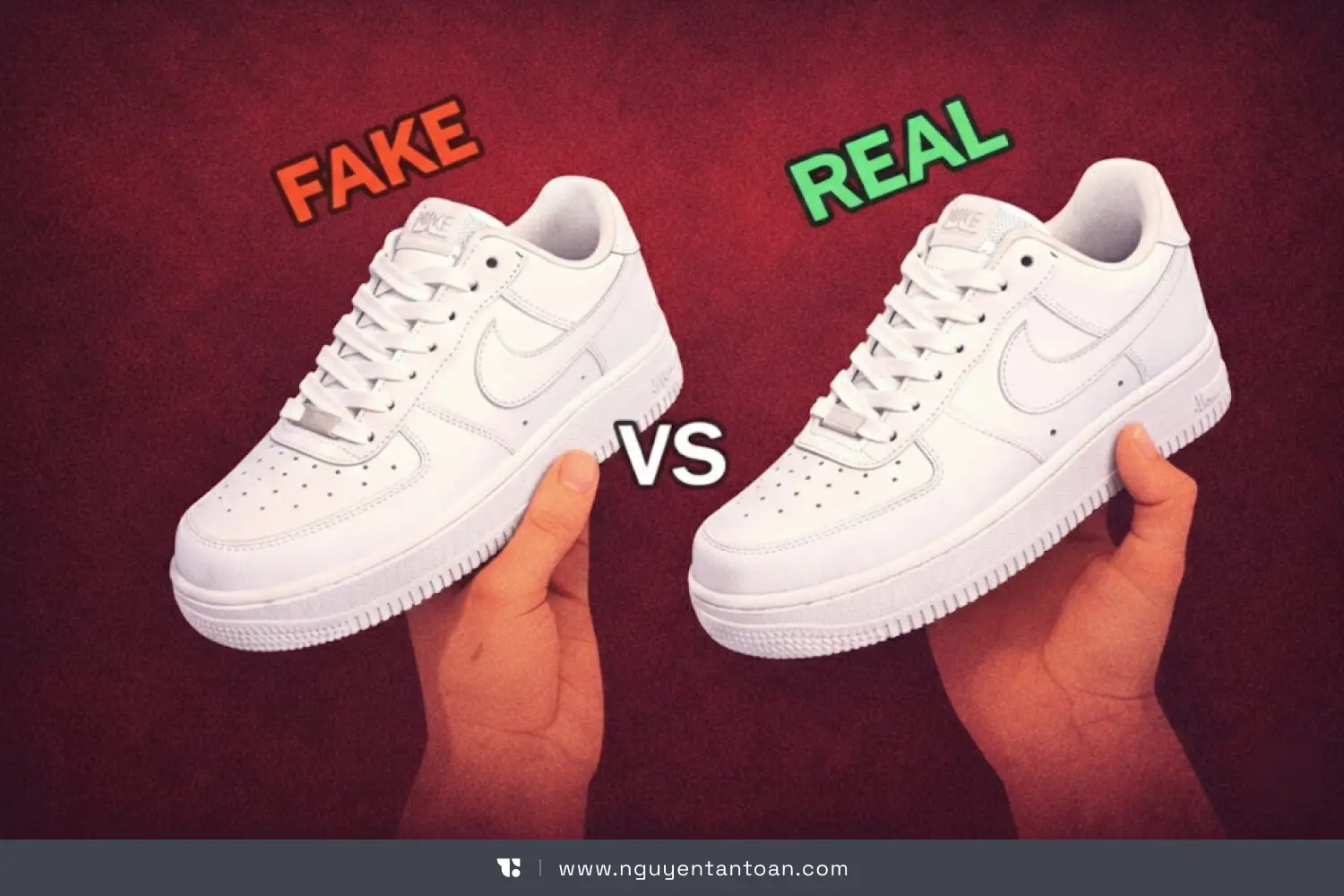
The trouble began when the signal was overused. In experience design, a cue that appears too often gradually loses the meaning it once had. When everyone is wearing Jordans, Yeezys or Dunks, fakes mixed in with the real thing, and they show up on students, delivery riders, influencers and everyone in between (I don't mean this as a comment on class), seeing them no longer sets anyone apart.
Viewers can no longer decode the message behind them. The same outward image, presented by too many different people in countless different contexts, wears the original meaning away. A recognition experience that used to be clear and exciting is now dull and meaningless.
A saturated trend and a devalued symbol
At some point, the sneaker craze in Vietnam became what you could call a pattern overused to the point of no longer working. When everyone sends the same signal, no signal is special anymore.
It is like a call to action that once worked very well but got plastered everywhere, until people learned to ignore it. When a signal no longer triggers a response, it is no longer a signal. It becomes background noise - something that is still there, but that nobody really notices.
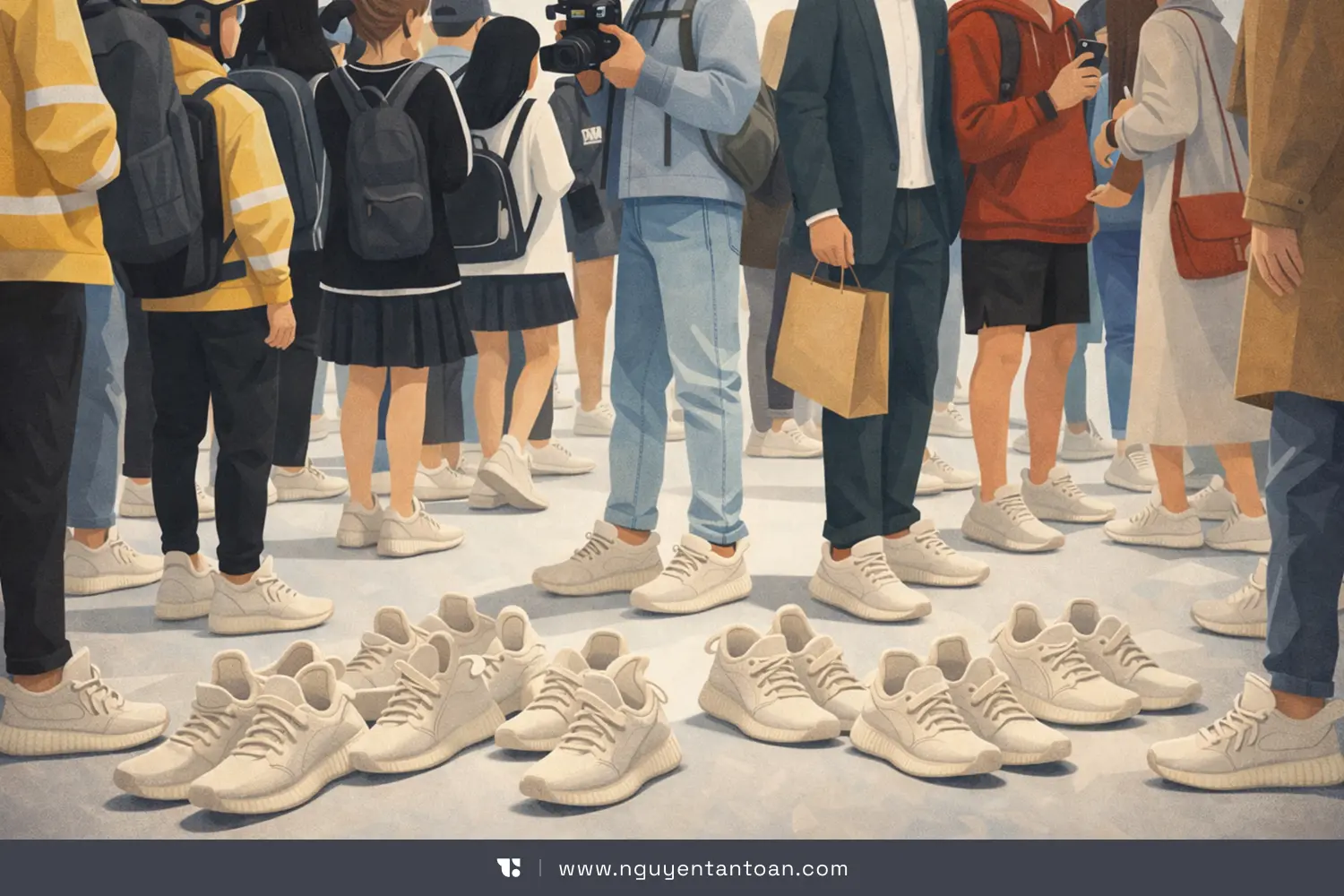
Counterfeits and the collapse of the trust layer
The second factor that wrecked the experience sits at a deeper layer: trust. A social signal only has value when there is an implicit trust between sender and receiver. I wear something, and other people believe it reflects my real effort, my real financial means, or my genuine aesthetic choices.
When counterfeits flood the market and get more and more convincing, that basic trust collapses. Viewers can no longer be sure that what they see is credible. Wearers start to wonder whether they are actually being recognized or just being judged as "putting on a show." The social experience turns awkward and uneasy, like using an app where the data on screen may or may not be correct, so nobody dares to base any judgment on it.
When the emotional cost outweighs the benefit
Once trust is broken, the experience is essentially dead. Nobody needs to announce that the sneaker movement is over. Users leave on their own when taking part no longer feels worth the effort and the money.
An expensive pair of shoes no longer brings pride or confidence. Instead, it can attract scrutinizing, suspicious looks. Psychologically, this is the point at which the emotional price you pay has far exceeded any benefit you could get.
Gen Z and the shifting "language" of fashion
Another key factor is the change in how the younger generation chooses to send signals. Gen Z has not given up the need for self-expression - people have always longed to be seen and understood. The only thing that has changed is the method they choose to get their message across.
Gen Z is redefining fashion, moving from loud signals to a subtler language. Instead of hype sneakers and flashy logos, they choose minimalist designs, neutral tones and quiet luxury. Reports from McKinsey to GenZ Footwear confirm it: this generation prioritizes timeless design, sustainability and deliberate understatement. This is not just a change in taste. It is a strategy for optimizing the social experience - creating a fashion "code" that takes a discerning eye to crack, in search of genuine connection rather than surface-level approval.
The move from overt fashion signals (hype sneakers, flashy brand logos) to subtle, implicit ones (minimalist sneakers, neutral tones, quiet luxury) is a step forward in the strategy of self-expression. The McKinsey and GenZ Footwear reports point in the same direction: this generation favors timeless design, sustainability and intentional restraint over noisy status symbols. The trend is not only about aesthetics. It is about optimizing the social experience - creating a new "language" that few people understand but that carries real weight, in search of genuine connection rather than surface-level approval.
Hype sneakers used to be like a giant billboard: loud, obvious, and understood by everyone. Today's signal is more like a subtle gesture: only people who share the same culture and the same sharp eye will notice and decode it. That shift creates a sense of selectiveness and closeness, two essential ingredients for building social value in this new era.
Sneaker hype and the personalization problem
Sneaker hype also had a fatal weakness: a lack of real personalization. The big-name models usually came with a ready-made story and a way of wearing them that was nearly identical for everyone.
Put on a pair of Jordan 1s and you easily slip into a template drawn in advance: how to style them, how to pose, what kind of photo to post. For a generation that sees personal identity as complex, layered and constantly changing, products that rigidly "box identity in" like this have lost their appeal. They don't let users write their own story. They only let them play a part in a play that has already been scripted.
Quiet refinement: a higher-order experience
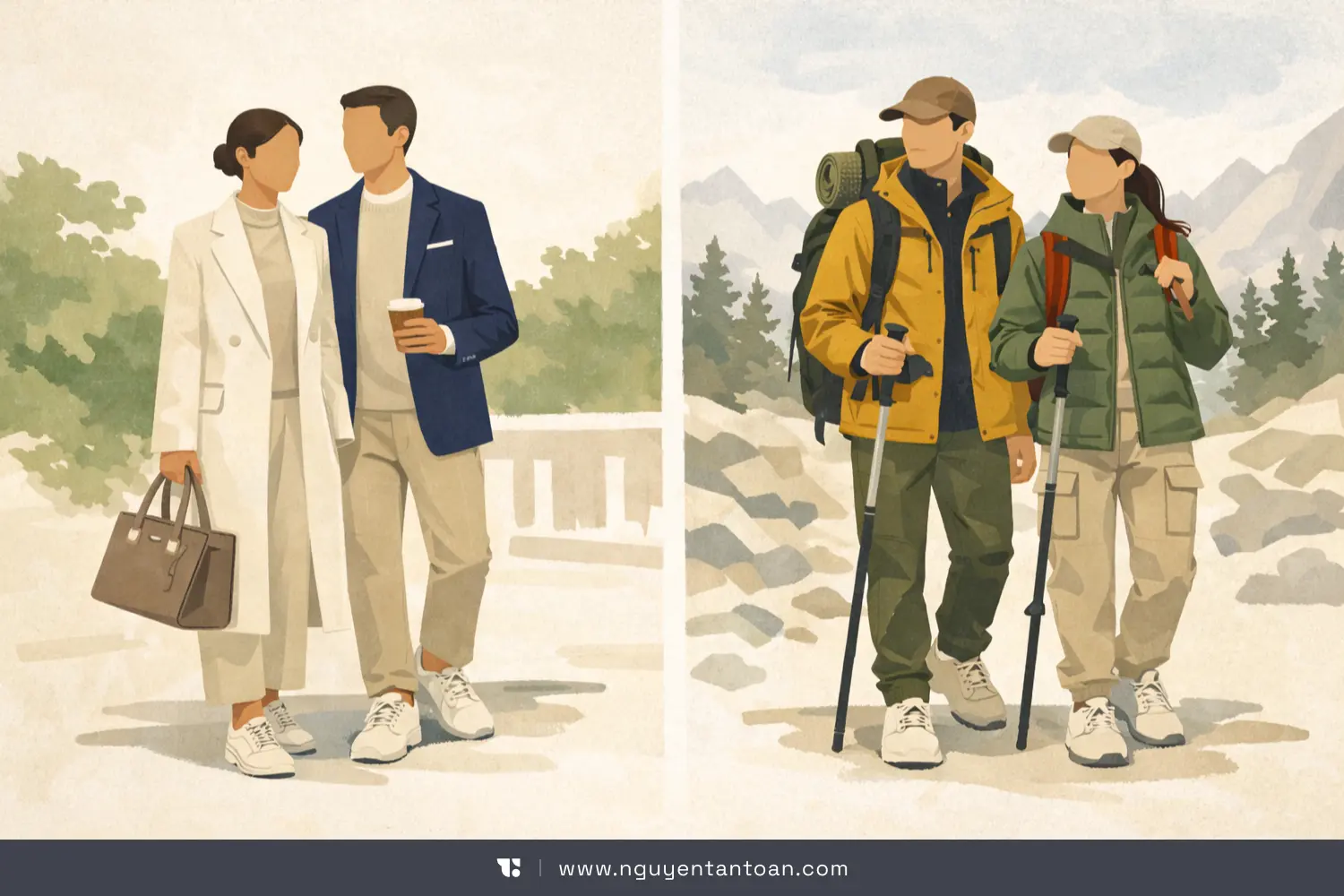
By contrast, trends like quiet luxury and gorpcore (outdoor-inspired style) value flexibility in how you express yourself. They don't impose a single story. They open up space for users to bring in their own life experience, habits and personal values.
That is exactly why signals with fewer logos and less showing off carry weight. They don't try to "speak for" their owner. They simply act as a subtle "frame" that each person fills with their own story and meaning.
Sneakers as a digital product
If we think of sneakers as a digital product, Jordan and Yeezy were once apps with perfect onboarding: easy to use, easy to show off, and quick to help users fit in. Over time, though, these products failed to "ship an update" that matched their users' new context and values.
Meanwhile, the less mainstream brands are more like tools for experts. They don't target the masses and they don't try to please everyone, but they give users the sense of control, understanding and depth that a real tool provides. It is the difference between a mass-market app and software built for people who know what they are doing.
Conclusion
The cooling of the sneaker craze in Vietnam does not mean the love of shoes has faded. It is simply the natural weeding out of a social experience that no longer fits. When the signal gets blurry, trust erodes and individuality is boxed in, users look for other channels of expression. They have not given up the need to express themselves. They are just rejecting "interfaces" that no longer tell their story accurately.
From a UX and behavioral psychology standpoint, this is a profound lesson for anyone who builds products. Users are not loyal because of a glossy exterior or a passing symbolic value. They stay because the product helps them communicate with the world in a way that is authentic, effective and true to who they are at that moment. Once a product can no longer do that, it will soon be left behind, no matter how thoroughly it once dominated the market.
References
- GenZ Footwear Report: https://www.scribd.com/document/978595116/GenZ-Footwear-Report
- McKinsey Report: https://www.businessoffashion.com/reports/news-analysis/the-state-of-fashion-2025-bof-mckinsey-report/
- Znews: https://znews.vn/an-ngu-10-ngay-o-bitexco-san-yeezy-la-dai-dien-cho-van-hoa-camp-giay-post979738.html
- The Economist: https://www.economist.com/culture/2025/04/03/sneakernomics-and-the-surprising-future-of-sneakers